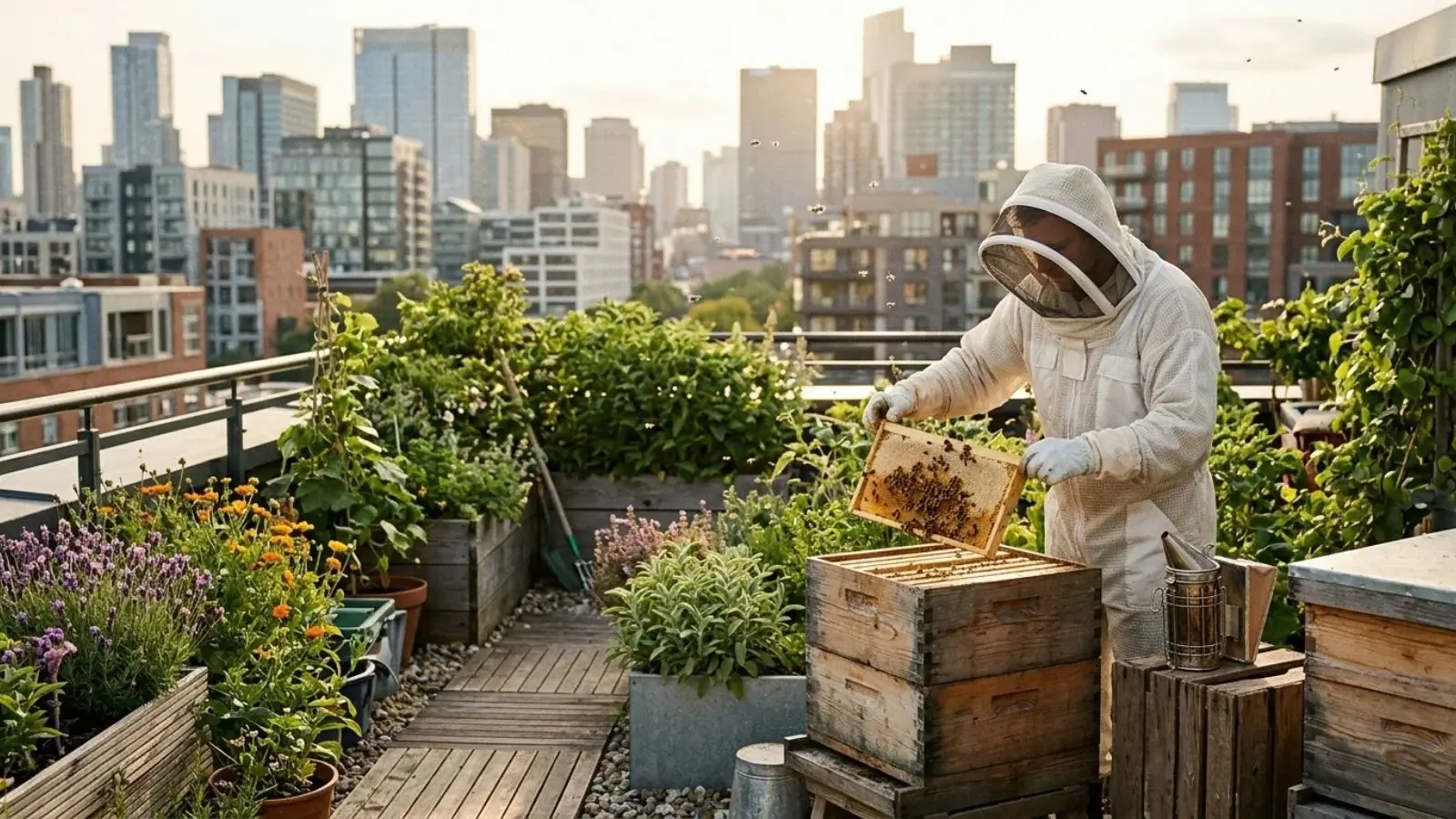
Cities are growing, buildings are getting taller, and green spaces are becoming harder to find. Yet, even in busy urban neighborhoods, bees can play an important role in supporting nature.
From rooftop gardens to community parks, urban beekeeping is creating new opportunities to protect pollinators while helping people reconnect with the environment.
Urban beekeeping involves keeping and managing bee colonies in city settings, such as rooftops, gardens, courtyards, and suitable community spaces.
When planned responsibly, it can support pollination, encourage environmental awareness, and help residents understand where their food comes from.
However, keeping bees in a city requires more than installing a hive. Beekeepers must consider local regulations, neighboring residents, water availability, and the health of existing pollinators.
Understanding these factors can help communities enjoy the benefits of urban beekeeping while avoiding unnecessary risks.
1. Help Urban Nature Thrive
One of the most valuable benefits of urban beekeeping is the opportunity to reconnect city residents with nature.
Urban environments often contain roads, concrete surfaces, buildings, and other structures that leave limited space for wildlife.
Carefully managed green spaces can help make these environments more welcoming to pollinators.
Bees visit flowers to collect nectar and pollen, and during this process, they transfer pollen between many flowering plants. This movement supports the reproduction of plants that depend on insect pollination.
Depending on the plant species, successful pollination can contribute to the production of seeds, fruits, and new growth.
A rooftop garden, balcony planting area, or community garden can provide useful forage for bees when it contains suitable flowering plants.
Urban beekeeping can also encourage residents to pay closer attention to local wildlife and the importance of healthy green spaces.
However, honeybees are not the only pollinators that matter. Wild bees, butterflies, hoverflies, and other insects also contribute to urban ecosystems.
Introducing honeybee colonies does not automatically improve biodiversity everywhere, particularly where wild pollinators already face competition for limited food.
The most effective approach combines responsible hive management with diverse planting, habitat protection, and care for local wildlife.
This helps cities become healthier places for a wider range of species, rather than focusing on honey production alone.
2. Support Better Pollination
Pollination is essential for many flowering plants, and urban gardens can benefit when suitable pollinators are present. Bees visiting flowers may help improve pollination for certain fruit trees, vegetables, herbs, and ornamental plants.
For example, some community gardens grow strawberries, squash, cucumbers, and other crops that benefit from insect pollination.
Fruit trees planted along suitable streets or in private gardens may also benefit from pollinator activity during flowering seasons.
Urban beekeeping can help people understand how closely food production is connected to insects. A garden that appears small or ordinary may depend on pollination for part of its harvest.
Learning about this process encourages gardeners to protect flowering plants and reduce unnecessary pesticide use.
Still, the results depend on local conditions. Not every crop requires insect pollination, and the presence of a honeybee hive does not guarantee a larger harvest.
Weather, plant varieties, soil quality, water availability, and the presence of other pollinators all influence outcomes.
Before introducing a hive, gardeners should assess if additional honeybees are appropriate for the area. In some locations, improving habitat for native pollinators may be more beneficial than increasing honeybee colonies.
A thoughtful approach focuses on the entire pollination system. Healthy gardens need suitable plants, diverse pollinators, and good growing conditions working together.
3. Turn Rooftops into Green Spaces
Rooftops are often overlooked when cities consider ways to introduce more nature into built up areas.
With proper planning, however, some rooftops can accommodate beehives alongside gardens, flowering plants, and other green infrastructure.
A suitable rooftop may provide open flight paths, good sunlight, and access to flowering plants nearby.
Placing hives in a carefully selected location can also make use of space that might otherwise remain unused.
Rooftop beekeeping can encourage building owners, businesses, schools, and community organizations to think differently about urban land.
A roof may become part of a broader sustainability project that includes pollinator friendly planting, rainwater management, and environmental education.
Nevertheless, not every rooftop is appropriate for beekeeping. Buildings must be able to support the equipment safely, and beekeepers need practical access for inspections, feeding when necessary, and hive maintenance.
Wind exposure, extreme heat, drainage, and nearby pedestrian areas also require consideration.
Property owners should check building rules and local regulations before installing hives. Safe access for maintenance is especially important because a hive that cannot be inspected properly can create problems for both the bees and surrounding residents.
When rooftop beekeeping is not practical, alternatives such as flowering roof gardens, planter boxes, and native wildflower areas can still provide valuable habitat for pollinators.
4. Make Cities More Biodiverse
Biodiversity refers to the variety of living organisms found in an environment, including plants, animals, fungi, and microorganisms.
Healthy urban biodiversity helps maintain ecological relationships and makes green spaces more valuable for wildlife.
Urban beekeeping can raise awareness of pollinators and encourage residents to plant flowers, maintain gardens, and protect green areas.
These activities can benefit the wider urban environment when they support different species rather than concentrating only on honeybees.
Plant diversity is particularly important. A garden containing several flowering species that bloom at different times can provide a more consistent food supply throughout the growing season.
Native plants are often useful because local insects may already depend on them for food, shelter, or reproduction.
Residents can also create small wildlife friendly spaces by reducing unnecessary chemical treatments, leaving suitable areas undisturbed, and planting a variety of flowers, shrubs, and trees.
However, adding honeybee colonies is not always the best way to increase biodiversity. In areas with limited flowers, large numbers of managed honeybees may compete with wild pollinators for resources. The effects depend on local ecology, colony density, and the availability of forage.
For this reason, responsible urban beekeeping should be part of a wider biodiversity plan. Protecting native pollinators, preserving habitat, and improving the quality of green spaces should remain central goals.
5. Bring Communities Together
Urban beekeeping can turn environmental care into a shared community activity. Residents who may rarely discuss gardening or wildlife can find common ground through a local beekeeping project.
Community gardens, educational centers, and environmental organizations can use beekeeping to introduce people to pollination, seasonal plant growth, and the responsibilities involved in caring for living organisms.
Participants may learn how colonies function, why bees need clean water, and how changing weather affects their activity.
Shared projects can also encourage people to work together. Volunteers might plant flowering areas, maintain a pollinator garden, or organize educational sessions about sustainable gardening.
These activities help create a stronger connection between people and the natural spaces around them.
Urban beekeeping can be particularly engaging for children and students when learning activities are supervised by trained adults and carried out at a safe distance from active hives.
Observation based lessons, photographs, and demonstrations can make environmental science more understandable.
Community involvement also helps address concerns before they become serious problems. Neighbors may feel more comfortable when they understand why hives are being kept, how they are managed, and whom to contact if an issue arises.
Successful projects depend on communication, shared responsibility, and realistic expectations. The goal should be to make the community more environmentally aware, not simply to produce honey.
6. Discover Local Honey
One appealing aspect of urban beekeeping is the possibility of producing honey from locally available flowering plants.
When colonies have suitable forage and the season allows it, beekeepers may harvest honey that reflects the plants blooming in the surrounding area.
Honey’s flavor, color, and aroma can vary according to the nectar sources available to bees. This makes local honey an interesting way to explore the relationship between seasonal flowers and food production.
Small scale beekeepers may share their harvest with family, neighbors, community groups, or local markets, depending on applicable regulations.
These activities can also help people appreciate the work required to maintain healthy colonies throughout the year.
However, honey production is not guaranteed. A colony may need to keep much of its stored honey to survive periods when flowers are scarce or weather conditions prevent foraging. Responsible beekeepers should never harvest more than the colony can spare.
It is also important to avoid assuming that honey from a city is automatically safer or less safe than honey from a rural area.
Environmental conditions vary widely, and urban pollution concerns should be assessed locally rather than judged by location alone.
Anyone selling honey should follow relevant food safety, labeling, and business requirements. The priority should always be colony health and responsible harvesting, with honey treated as a possible benefit rather than the only purpose of keeping bees.
7. Learn the Responsibilities First
Urban beekeeping can be rewarding, but it requires knowledge, regular attention, and a realistic understanding of bee behavior.
A hive is a living colony that needs appropriate care throughout the year, not a decorative feature that can be left unattended.
Beginners should learn the basics of colony health, seasonal management, disease prevention, feeding when necessary, and responsible harvesting.
Joining a local beekeeping association or learning from an experienced mentor can help new beekeepers develop these skills before purchasing equipment.
Location is another major consideration. Hives should be positioned to reduce unnecessary encounters with people, pets, and busy walkways.
Appropriate barriers or screens can encourage bees to fly upward when leaving the hive, although these measures do not eliminate the possibility of encounters or stings.
Beekeepers should also provide a suitable water source so bees are less likely to gather around swimming pools, outdoor taps, or neighboring properties. Water containers need safe landing surfaces to reduce the risk of drowning.
Before installing a hive, check local laws, property permissions, building restrictions, and any relevant public health or neighborhood requirements. Some locations limit the number of hives or specify where they can be placed.
People with known severe sting allergies should take particular care around active colonies. If a project is intended for a shared public space, safety planning and clear communication are essential.
Responsible management protects the bees while helping neighbors feel comfortable with the project.
8. Choose Plants Bees Need
A successful urban beekeeping project depends on more than the hive itself. Bees need access to appropriate flowering plants that provide nectar and pollen, ideally across different seasons.
Gardeners can support pollinators by selecting a variety of plants suited to their local climate and growing conditions.
Native flowering plants are often a good starting point because they may support local wildlife more effectively than a garden containing only a few ornamental species.
Planting flowers with different blooming periods helps reduce seasonal gaps in food availability. Herbs, flowering shrubs, fruit trees, and other suitable plants can contribute to a more diverse urban landscape when chosen carefully.
Avoid relying entirely on a single flowering species. If it finishes blooming quickly, bees and other insects may struggle to find enough food afterward.
A mixed planting plan offers more consistent resources and can make gardens attractive throughout the growing season.
Pesticide use also deserves attention. Some chemicals can harm bees and other pollinators, particularly when applied to flowering plants or when insects are actively visiting them.
Choose integrated pest management methods where possible, and follow product labels and local guidance whenever treatment is necessary.
Remember that bees need suitable habitat as well as food. Protecting nesting sites for wild bees, maintaining varied vegetation, and avoiding unnecessary disturbance can make a meaningful difference.
By combining appropriate planting with careful hive management, residents can support a healthier and more resilient urban environment.
9. FAQs
What is urban beekeeping?
Urban beekeeping is the practice of keeping and managing bee colonies in city environments, including rooftops, gardens, courtyards, and approved community spaces.
It can support education, local honey production, and awareness of pollinators when practiced responsibly.
What are the main benefits of urban beekeeping?
Potential benefits include increased awareness of pollination, opportunities for local honey production, community education, and stronger interest in urban gardening.
The ecological benefits depend on local conditions and responsible colony management.
Can bees survive in cities?
Yes, honeybees can survive in many urban environments when they have suitable forage, water, shelter, and proper management.
However, pollution, extreme weather, disease, pesticide exposure, and limited flowering plants can affect colony health.
Is urban beekeeping safe for neighbors?
It can be managed responsibly, but it is not entirely risk free. Appropriate hive placement, regular inspections, a reliable water source, suitable flight paths, and compliance with local rules can reduce potential problems.
Does urban beekeeping help all pollinators?
Not necessarily. Honeybees may support pollination, but they can also compete with wild pollinators where food resources are limited.
Diverse native planting and habitat protection are important for supporting the broader pollinator community.
How can beginners start urban beekeeping?
Start by researching local regulations and finding a reputable beekeeping association or experienced mentor.
Learn about colony care, hive placement, seasonal management, and safety before buying equipment or introducing bees.
Conclusion: Make Room for Bees
Urban beekeeping offers cities an opportunity to bring people closer to nature while encouraging conversations about pollination, food production, and environmental responsibility.
Rooftops, community gardens, and other suitable spaces can become places where residents learn how bees contribute to ecosystems and why healthy green spaces matter.
Still, successful beekeeping requires thoughtful planning. Bees need reliable food sources, clean water, suitable habitats, and attentive management.
Communities must also consider neighboring residents, local regulations, and the needs of wild pollinators.
You do not have to keep a hive to support bees in your city. Planting suitable flowers, reducing unnecessary pesticide use, protecting green spaces, and learning about native pollinators are practical ways to make a difference.
When urban beekeeping is approached responsibly and combined with wider conservation efforts, it can help create greener, more nature conscious communities where people and pollinators have a better chance to thrive.

I’m William Parker, a content writer with a strong interest in facts, knowledge, and the stories behind the information we encounter every day. I enjoy researching topics that make people stop and think, especially unusual facts, history, science, technology, and human culture. I believe learning becomes much more enjoyable when information is presented in a simple and relatable way.
Books by William Parker:
- The Ultimate Book of Interesting Facts
- Inside the World of Knowledge