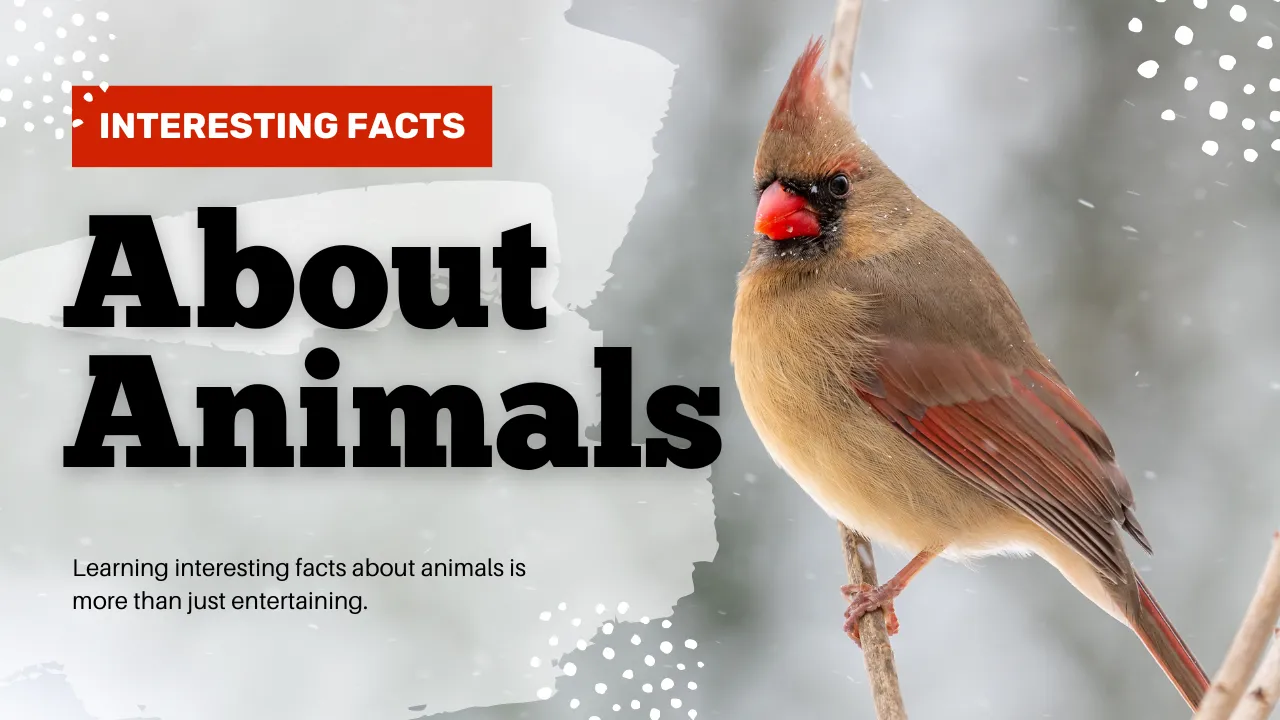
Animals have fascinated humans for thousands of years. From tiny insects that can lift many times their body weight to giant whales that communicate across oceans, the animal kingdom is full of incredible surprises that continue to amaze scientists and nature lovers alike.
Learning interesting facts about animals is more than just entertaining. It helps us understand biodiversity, evolution, ecosystems, and the remarkable ways living creatures survive in different environments. Every species has unique characteristics that contribute to the balance of nature.
Whether you’re a student, wildlife enthusiast, traveler, or simply curious about the natural world, this guide explores fascinating animal facts, evolutionary history, unusual behaviors, and the importance of protecting Earth’s wildlife.
Quick Facts About Animals
| Feature | Details |
| Scientific Kingdom | Animalia |
| Estimated Species | Over 2 million identified species |
| Habitats | Forests, oceans, deserts, mountains, grasslands, wetlands, polar regions |
| Largest Animal | Blue whale |
| Smallest Mammal | Bumblebee bat |
| Fastest Land Animal | Cheetah |
| Fastest Bird | Peregrine falcon |
| Longest-Living Animal | Greenland shark (estimated 250–500 years) |
| Importance | Ecosystem balance, pollination, food chains, biodiversity |
| Conservation Status | Thousands of species are threatened due to habitat loss and climate change |
Understanding the Animal Kingdom
Animals belong to the biological kingdom known as Animalia, one of the largest and most diverse groups of living organisms on Earth. Scientists classify animals into numerous groups based on anatomy, genetics, and evolutionary history.
Animals inhabit nearly every environment imaginable. They thrive in scorching deserts, freezing polar regions, deep ocean trenches, tropical rainforests, and even underground caves.
Unlike plants, animals obtain energy by consuming other organisms. Their remarkable adaptations—including camouflage, migration, intelligence, speed, and specialized senses—allow them to survive in challenging conditions.
Today, researchers continue discovering hundreds of new animal species every year, proving that much of Earth’s biodiversity remains unexplored.
The Evolution and History of Animals
Animal life began in Earth’s oceans more than 600 million years ago. The earliest animals were simple, soft-bodied organisms that gradually evolved into more complex forms.
One of the most significant events in evolutionary history was the Cambrian Explosion, approximately 541 million years ago, when many major animal groups appeared within a relatively short geological period.
Dinosaurs dominated terrestrial ecosystems for over 160 million years before a mass extinction event around 66 million years ago. Their disappearance opened opportunities for mammals and birds to diversify.
Modern animals continue evolving today as environmental conditions change. Natural selection, genetic mutations, and adaptation enable species to respond to new challenges such as climate shifts and habitat changes.
20 Interesting Facts About Animals
1. Octopuses Have Three Hearts
An octopus possesses three hearts. Two pump blood to the gills, while the third circulates blood throughout the body. Interestingly, the main heart temporarily stops beating when the octopus swims, making movement extremely energy-intensive.
This unique circulatory system helps octopuses thrive in oxygen-poor marine environments.
2. Crows Can Recognize Human Faces
Crows are among the smartest birds on Earth. They can remember individual human faces for years and even warn other crows about people they perceive as threats.
Their impressive memory demonstrates advanced social intelligence rarely seen in birds.
3. Elephants Communicate Using Vibrations
Elephants don’t rely solely on trumpeting sounds. They produce low-frequency rumbles that travel through the ground over several kilometers.
Other elephants detect these vibrations through sensitive cells in their feet, allowing communication across long distances.
4. Sloths Can Hold Their Breath Longer Than Dolphins
Although sloths move slowly, they possess an unexpected survival skill. By slowing their heart rate, they can hold their breath for around 40 minutes underwater.
This ability actually exceeds the diving time of many dolphins.
5. Mantis Shrimp Deliver One of Nature’s Fastest Punches
The mantis shrimp strikes prey with incredible speed, producing forces powerful enough to crack shells and even break aquarium glass.
The impact briefly creates tiny underwater bubbles that release additional energy when they collapse.
6. Blue Whales Are the Largest Animals Ever Known
The blue whale is not only the largest living animal but also the biggest creature known to have existed.
Its heart alone can weigh as much as a small car, and its tongue weighs roughly as much as an elephant.
7. Penguins Propose With Pebbles
Some penguin species offer carefully selected pebbles to potential mates.
If accepted, the pebble becomes part of the nest, symbolizing partnership and cooperation during breeding.
8. Giraffes Sleep Very Little
Adult giraffes often sleep only four to five hours within an entire day, usually in brief naps lasting just a few minutes.
Their limited sleep helps them remain alert for predators roaming African grasslands.
9. Dolphins Have Individual Names
Each bottlenose dolphin develops a unique whistle that functions much like a personal name.
Other dolphins use these signature whistles to identify and call specific individuals within their social groups.
10. Honeybees Can Understand Simple Mathematics
Scientific studies suggest honeybees can distinguish quantities and even solve basic numerical problems involving addition and subtraction.
Despite their tiny brains, they perform surprisingly complex cognitive tasks.
11. Chameleons Change Color for Communication
Contrary to popular belief, chameleons do not primarily change color for camouflage.
Their color shifts often communicate mood, health, body temperature, or readiness to mate.
12. Sea Otters Hold Hands While Sleeping
Sea otters frequently hold hands or wrap themselves in kelp while resting.
This adorable behavior prevents them from drifting apart in ocean currents and strengthens social bonds.
13. Tardigrades Can Survive Extreme Conditions
Tiny creatures called tardigrades can survive freezing temperatures, intense radiation, dehydration, and even the vacuum of outer space.
Their extraordinary resilience makes them one of Earth’s toughest life forms.
14. Cheetahs Accelerate Faster Than Most Sports Cars
A cheetah can reach speeds exceeding 60 miles per hour within just a few seconds.
Its lightweight body, flexible spine, and powerful muscles make it the fastest land animal.
15. Frogs Can Freeze Without Dying
Certain wood frogs survive winter by allowing much of their bodies to freeze.
Their cells produce natural compounds that protect vital organs until warmer temperatures return.
16. Parrots Understand More Than Mimicry
Many parrots genuinely associate words with objects, colors, shapes, or actions instead of simply copying sounds.
Some species demonstrate reasoning abilities comparable to young children in specific tasks.
17. Ants Build Highly Organized Societies
Ant colonies include specialized workers, soldiers, nurses, and queens, each performing different responsibilities.
Their efficient teamwork allows colonies to function almost like a single superorganism.
18. Sharks Are Older Than Trees
Sharks have existed for over 400 million years.
Trees appeared significantly later, making sharks one of Earth’s oldest surviving vertebrate groups.
19. Emperor Penguins Endure Extreme Winters
Male emperor penguins incubate eggs during Antarctica’s harsh winter without eating for about two months.
They survive by huddling together, sharing warmth while protecting the next generation.
20. Bats Play a Crucial Role in Agriculture
Many bats consume thousands of insects each night, reducing crop pests naturally.
Fruit bats also pollinate flowers and disperse seeds, helping forests regenerate and supporting agricultural productivity.
Animal Behaviors That Continue to Surprise Scientists
Animal intelligence extends far beyond simple instinct. Researchers have documented problem-solving, tool use, cooperation, empathy, planning, and even play across numerous species.
For example:
Tool Use
Chimpanzees use sticks to gather termites.
Sea otters crack shellfish using rocks.
Some birds shape twigs into hooks for extracting insects.
Memory
Squirrels remember thousands of food storage locations.
Elephants recognize family members after decades of separation.
Salmon return to the rivers where they were born.
Cooperation
Wolves hunt together using coordinated strategies.
Orcas teach hunting techniques to younger pod members.
Meerkats assign sentries to warn groups about predators.
These discoveries continue reshaping our understanding of animal cognition.
Special Adaptations That Help Animals Survive
Nature has equipped animals with extraordinary survival strategies.
Camouflage
Leaf insects resemble actual leaves.
Snowshoe hares change coat color with the seasons.
Octopuses rapidly alter skin texture and color.
Defensive Mechanisms
Porcupines use sharp quills.
Skunks spray powerful defensive chemicals.
Pufferfish inflate to discourage predators.
Migration
Arctic terns travel more than 40,000 miles annually.
Monarch butterflies complete multi-generational migrations across North America.
These adaptations illustrate how evolution enables survival in changing environments.
Why Animals Matter to Humans and Nature
Animals provide countless ecological benefits that humans often take for granted.
Pollinators support food production by fertilizing flowering plants.
Predators help regulate prey populations, maintaining ecosystem balance.
Marine animals contribute to healthy oceans, while scavengers recycle nutrients by cleaning the environment.
Many modern medicines have also been inspired by animal biology, including treatments developed through studying venom, amphibian skin compounds, and marine organisms.
Protecting wildlife ultimately protects human well-being.
Modern Challenges Facing Wildlife
Although many animal populations remain healthy, others face growing threats.
Major challenges include:
- Habitat destruction
- Climate change
- Plastic pollution
- Illegal wildlife trade
- Overfishing
- Deforestation
- Invasive species
Conservation organizations, governments, and local communities are working together to restore habitats, establish protected areas, and promote sustainable practices that safeguard biodiversity.
Frequently Asked Questions
What is the most interesting fact about animals?
One of the most fascinating facts is that octopuses have three hearts and blue blood, allowing them to survive efficiently in marine environments.
Which animal has the highest intelligence?
Great apes, dolphins, elephants, crows, and some parrots rank among the world’s most intelligent animals due to their problem-solving abilities and social learning.
What is the rarest animal on Earth?
Several species are critically endangered, but the vaquita, a small porpoise found in the Gulf of California, is considered one of the rarest mammals.
Which animal lives the longest?
The Greenland shark may live between 250 and 500 years, making it one of the longest-living vertebrates known.
Why are animals important to ecosystems?
Animals pollinate plants, disperse seeds, regulate populations, recycle nutrients, and maintain healthy food webs that support all forms of life.
How many animal species exist?
Scientists have identified over 2 million species, but estimates suggest millions more remain undiscovered.
Conclusion
The animal kingdom is filled with astonishing diversity, remarkable intelligence, and extraordinary survival strategies. From whales communicating across vast oceans to tiny tardigrades surviving conditions that would destroy most life, these interesting facts about animals highlight just how incredible nature truly is.
Understanding wildlife goes beyond satisfying curiosity. It deepens our appreciation for biodiversity, encourages conservation, and reminds us that every species plays a valuable role in maintaining Earth’s ecosystems. As scientific discoveries continue, we’re certain to uncover even more amazing secrets hidden within the natural world.

I’m Grace Anderson, a lifelong learner and writer with a habit of asking, “Why?” I love discovering the stories, facts, meanings, and explanations hiding behind ordinary questions. At Factopea, I turn my research into clear articles that readers can enjoy without needing complicated terminology. I believe learning does not always have to feel like studying—it can simply begin with one interesting question.
Books: Curiosity Has an Answer and Things You Never Noticed