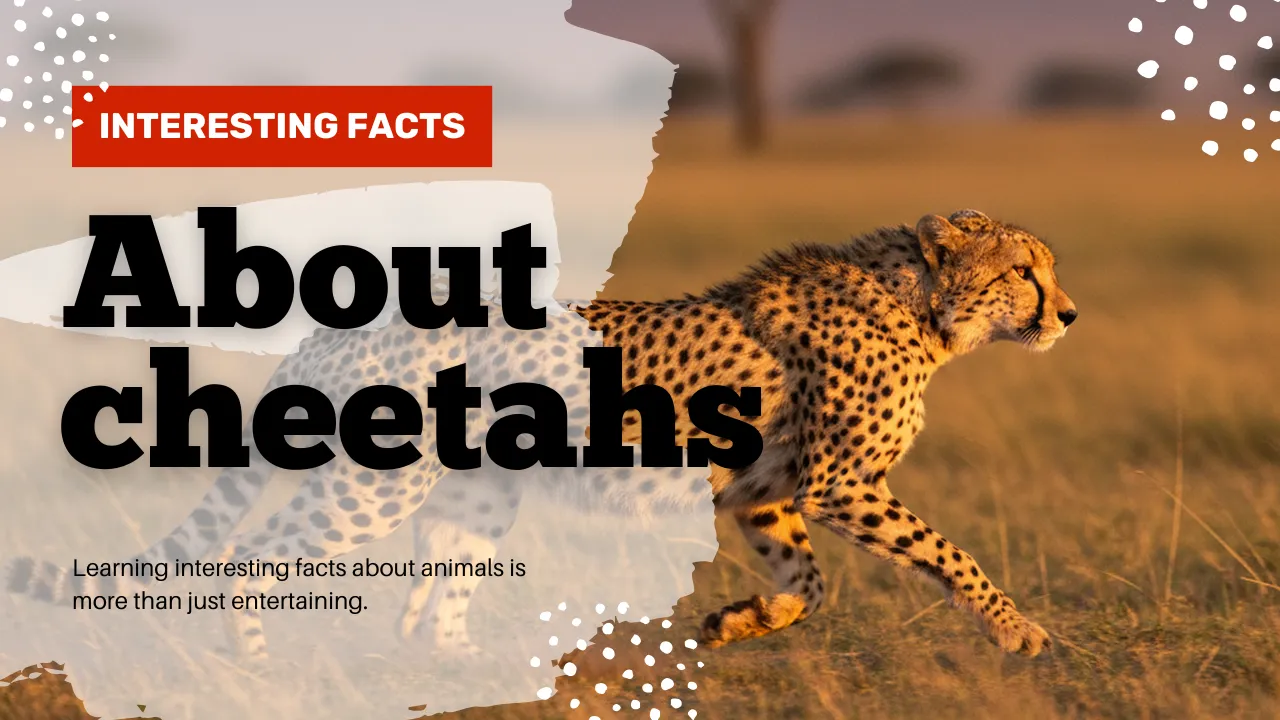
Cheetahs are among the most fascinating animals on Earth. Famous for their breathtaking speed, these graceful big cats have captured human imagination for thousands of years. While many people know that cheetahs are the fastest land animals, there is much more to discover about their unique biology, behavior, history, and role in nature.
Whether you’re a wildlife enthusiast, student, traveler planning an African safari, or simply curious about these incredible predators, learning interesting facts about cheetahs offers a deeper appreciation for one of the world’s most remarkable species. From their specialized hunting techniques to their surprising family life, cheetahs continue to amaze scientists and animal lovers alike.
Quick Facts About Cheetahs
| Feature | Details |
| Common Name | Cheetah |
| Scientific Name | Acinonyx jubatus |
| Animal Type | Mammal |
| Family | Felidae (Cat Family) |
| Average Speed | Up to 70 mph (112 km/h) |
| Habitat | Grasslands, savannas, open woodlands |
| Diet | Gazelles, impalas, hares, birds |
| Lifespan | 10–12 years in the wild |
| Weight | 75–140 pounds (34–64 kg) |
| Conservation Status | Vulnerable |
| Main Range | Eastern and Southern Africa, small population in Iran |
| Main Predator Threats | Lions, hyenas, leopards, habitat loss |
Background and Overview
The cheetah is unlike any other member of the cat family. Its lightweight body, long legs, deep chest, flexible spine, and powerful muscles make it perfectly adapted for speed rather than strength.
Unlike lions and tigers that rely on power, cheetahs survive by chasing down prey in open landscapes where they can use their incredible acceleration. They are mainly found across Africa’s grasslands and savannas, although a critically endangered population of Asiatic cheetahs still survives in Iran.
Cheetahs play a vital ecological role by controlling herbivore populations and maintaining healthy ecosystems.
The History of Cheetahs
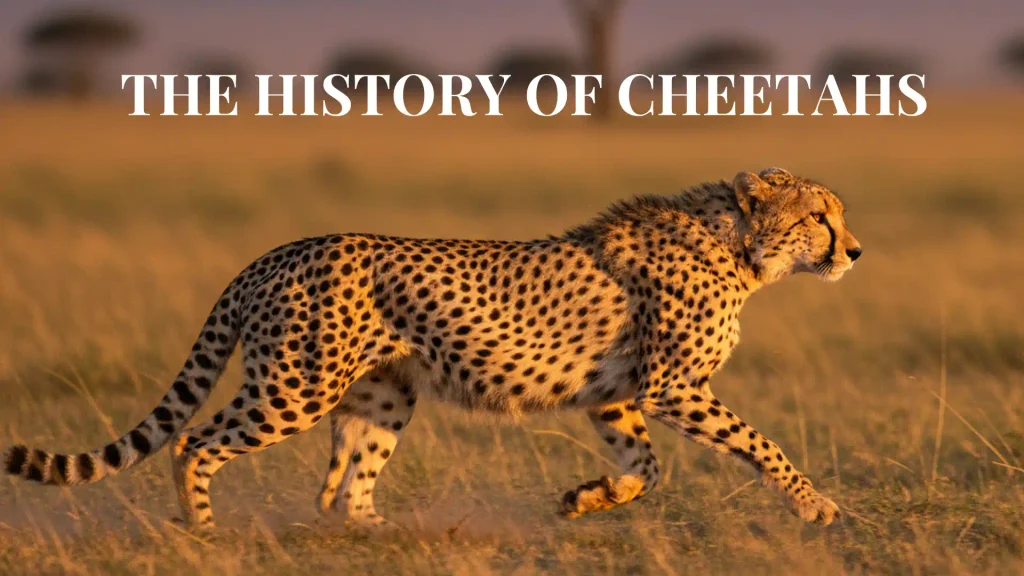
Cheetahs have existed for millions of years. Fossil evidence suggests that their ancestors once lived across Africa, Asia, Europe, and even North America.
Thousands of years ago, ancient Egyptians admired cheetahs and sometimes kept them as hunting companions. Historical artwork frequently depicts royalty alongside tame cheetahs, symbolizing elegance and prestige.
During the Mughal Empire in India, rulers such as Emperor Akbar reportedly owned hundreds of trained cheetahs for hunting antelope. Unfortunately, excessive capture from the wild contributed to the disappearance of cheetahs from India by the mid-20th century.
Today, conservation programs are working to restore populations and protect their remaining habitats.
20 Interesting Facts About Cheetahs
1. Cheetahs Are the Fastest Land Animals
A cheetah can reach speeds of up to 70 mph (112 km/h), making it faster than any other land animal. It can accelerate from 0 to 60 mph in only a few seconds. This astonishing speed helps it catch agile prey before they can escape.
2. They Cannot Maintain Top Speed for Long
Although incredibly fast, cheetahs can sprint at maximum speed for only about 20 to 30 seconds. Running at such extreme speeds requires enormous energy and rapidly raises body temperature, forcing them to stop and recover.
3. Their Spine Works Like a Giant Spring
A cheetah’s flexible backbone stretches and contracts dramatically during each stride. This spring-like movement allows the animal to cover distances of up to 25 feet (about 7.6 meters) in a single leap, increasing both speed and efficiency.
4. Black Tear Marks Improve Hunting
The black lines running from the eyes to the mouth are not just beautiful markings. These “tear marks” reduce sunlight glare and improve focus when spotting prey during bright daytime conditions.
5. Cheetahs Hunt During the Day
Unlike many other large cats that prefer hunting at night, cheetahs usually hunt in the early morning or late afternoon. Daytime hunting helps them avoid dangerous confrontations with lions and hyenas.
6. Every Cheetah Has a Unique Spot Pattern
Just like human fingerprints, no two cheetahs have identical spot patterns. Researchers often use these natural markings to identify individual animals during wildlife studies.
7. Their Claws Are Semi-Non-Retractable
Most cats completely retract their claws, but cheetahs cannot. Their exposed claws function like athletic spikes, providing extra grip while running at extraordinary speeds.
8. Their Tail Acts Like a Rudder
A cheetah’s long tail helps maintain balance during high-speed chases. It works similarly to a rudder on a boat, allowing rapid turns while pursuing zigzagging prey.
9. They Have Excellent Eyesight
Cheetahs rely heavily on vision rather than smell. Their exceptional eyesight enables them to detect prey from several miles away across open grasslands.
10. Cheetahs Rarely Roar
Unlike lions, tigers, and leopards, cheetahs cannot roar. Instead, they communicate using chirps, purrs, growls, hisses, yelps, and bird-like calls, especially between mothers and cubs.
11. Mothers Raise Cubs Alone
Female cheetahs care for their cubs without assistance from males. Cubs remain with their mother for around 18 months while learning essential hunting and survival skills.
12. Cub Mortality Is Surprisingly High
Many cheetah cubs do not survive their first year because lions, hyenas, leopards, and even large birds of prey can attack them. Camouflage and maternal care are essential for survival.
13. Male Cheetahs Often Form Coalitions
Unlike females, brothers frequently stay together after leaving their mother. These coalitions improve hunting success and increase their chances of defending valuable territories.
14. Cheetahs Prefer Smaller Prey
Instead of challenging large animals, cheetahs usually hunt medium-sized antelope such as gazelles and impalas. Smaller prey reduces the risk of injury during hunting.
15. They Lose Many Kills
Even after a successful chase, cheetahs often lose their meal to stronger predators like lions and spotted hyenas. Because they are built for speed rather than fighting, they usually abandon the carcass instead of risking injury.
16. They Have Low Genetic Diversity
Scientists believe modern cheetahs experienced a severe population bottleneck thousands of years ago. As a result, they have remarkably low genetic variation, making disease resistance and reproduction more challenging.
17. They Can Overheat Quickly
Extreme sprinting generates tremendous heat inside a cheetah’s body. After each chase, it must rest before eating or moving again, making it vulnerable to scavengers.
18. Asiatic Cheetahs Are Extremely Rare
While African cheetahs are found in several countries, the Asiatic cheetah is critically endangered. Only a very small number remain in Iran, making it one of the world’s rarest big cats.
19. Cheetahs Avoid Conflict Whenever Possible
Unlike many predators, cheetahs prefer avoiding fights. Escaping injury is more important than defending food because even a minor injury can prevent successful hunting.
20. Conservation Efforts Are More Important Than Ever
Habitat fragmentation, illegal wildlife trade, declining prey populations, and human-wildlife conflict continue to threaten cheetahs. Conservation organizations are working to protect landscapes, improve coexistence with local communities, and increase long-term survival.
Physical Adaptations That Make Cheetahs Extraordinary
Lightweight Body
Compared to lions or leopards, cheetahs have slimmer bodies and smaller heads, reducing weight for faster movement.
Large Nasal Passages
Their enlarged nostrils and lungs allow greater oxygen intake during high-speed pursuits.
Powerful Leg Muscles
Long, muscular legs generate explosive acceleration that few animals can match.
Flexible Shoulder Blades
Freely moving shoulder blades increase stride length and contribute to remarkable running efficiency.
Habitat and Distribution
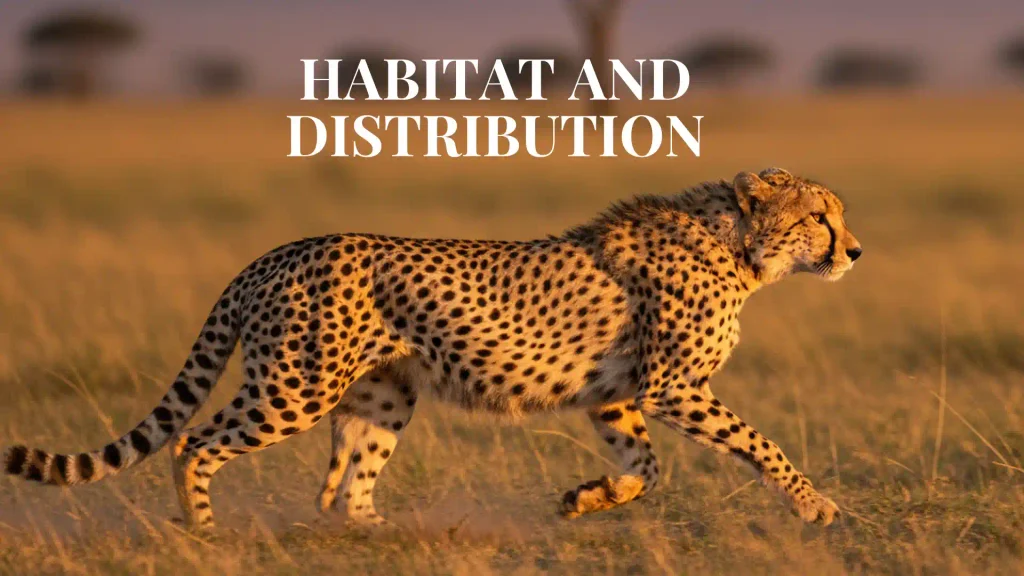
Cheetahs thrive in open environments where speed provides the greatest advantage. Tall forests are generally unsuitable because visibility and sprinting space are limited.
Today, the largest populations are found in countries including:
- Botswana
- Namibia
- Kenya
- Tanzania
- South Africa
- Zimbabwe
Smaller populations exist elsewhere, while the Asiatic cheetah survives only in isolated parts of Iran.
Behavior and Social Life
Cheetahs display one of the most unique social systems among big cats.
Females are mostly solitary except when raising cubs. Adult males often establish territories and sometimes live with brothers in stable coalitions.
Communication involves scent marking, vocalizations, body posture, and scratching trees or termite mounds.
Diet and Hunting Techniques
Cheetahs are highly specialized hunters.
Their typical prey includes:
- Thomson’s gazelles
- Impalas
- Springboks
- Young wildebeest
- Hares
- Guinea fowl
- Small antelope
Rather than relying on surprise attacks from dense cover, cheetahs stalk prey carefully before launching explosive sprints. They usually trip prey using a swipe of the paw before delivering a suffocating throat bite.
Conservation and Modern Importance
Cheetahs are currently listed as Vulnerable, with wild populations declining in many regions.
Major threats include:
- Habitat destruction
- Expanding agriculture
- Human-wildlife conflict
- Illegal pet trade
- Declining prey populations
- Climate change
Conservation programs focus on habitat protection, scientific monitoring, community education, wildlife corridors, and reducing conflict between farmers and predators.
Protecting cheetahs also safeguards countless other species that share the same ecosystems.
Why Cheetahs Matter to Ecosystems
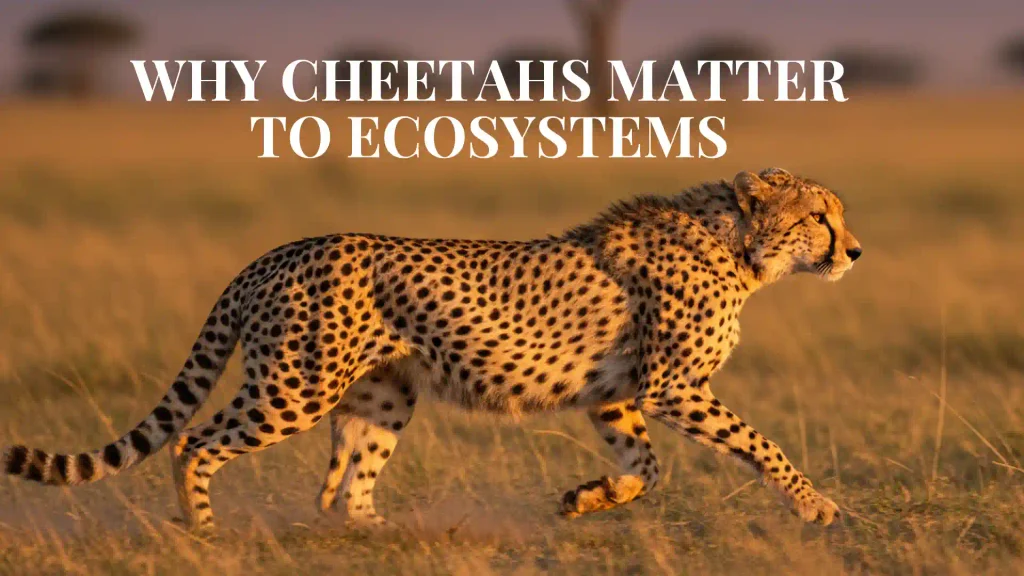
Cheetahs help maintain balanced ecosystems by naturally regulating herbivore populations. Healthy predator populations reduce overgrazing, allowing vegetation to recover and supporting biodiversity.
Because cheetahs require large, connected landscapes, protecting them also preserves habitats for elephants, zebras, giraffes, birds, and many other wildlife species.
Frequently Asked Questions
Why are cheetahs the fastest land animals?
Their lightweight body, flexible spine, powerful leg muscles, long tail, and specialized claws combine to create unmatched speed and acceleration.
Can cheetahs climb trees?
Yes. Although they are not as skilled as leopards, cheetahs can climb low trees and termite mounds to scan for prey or danger.
Are cheetahs dangerous to humans?
Wild cheetahs generally avoid people and are considered less aggressive than many other large predators. However, they remain wild animals and should never be approached.
Why don’t cheetahs roar?
Their voice box differs from roaring cats. Instead, they produce chirps, purrs, growls, and other vocal sounds.
How many cheetahs remain in the wild?
Scientists estimate that fewer than 7,500 mature cheetahs remain in the wild, although exact numbers change as new surveys are conducted.
What is the biggest threat to cheetahs?
Habitat loss, conflict with humans, declining prey, and habitat fragmentation are among the greatest threats to their survival.
Conclusion
Learning interesting facts about cheetahs reveals that these animals are far more than simply the fastest runners on Earth. Their remarkable physical adaptations, unique hunting style, complex social behavior, and long relationship with human history make them one of nature’s most extraordinary predators.
Despite their incredible abilities, cheetahs face serious conservation challenges that require global attention. Protecting their habitats and supporting wildlife conservation efforts helps ensure that future generations can continue to admire these magnificent cats in the wild. The more we understand about cheetahs, the better equipped we are to appreciate and protect one of the planet’s most iconic species.

I’m James Anderson, a curious researcher and writer who loves discovering interesting facts and exploring the stories behind them. I enjoy writing about history, science, culture, nature, geography, and the surprising details of everyday life. I aim to turn reliable information into simple, engaging content that helps readers learn something new and useful.
Books by James Anderson:
- The Fascinating World of Facts
- 1000 Things You Never Knew