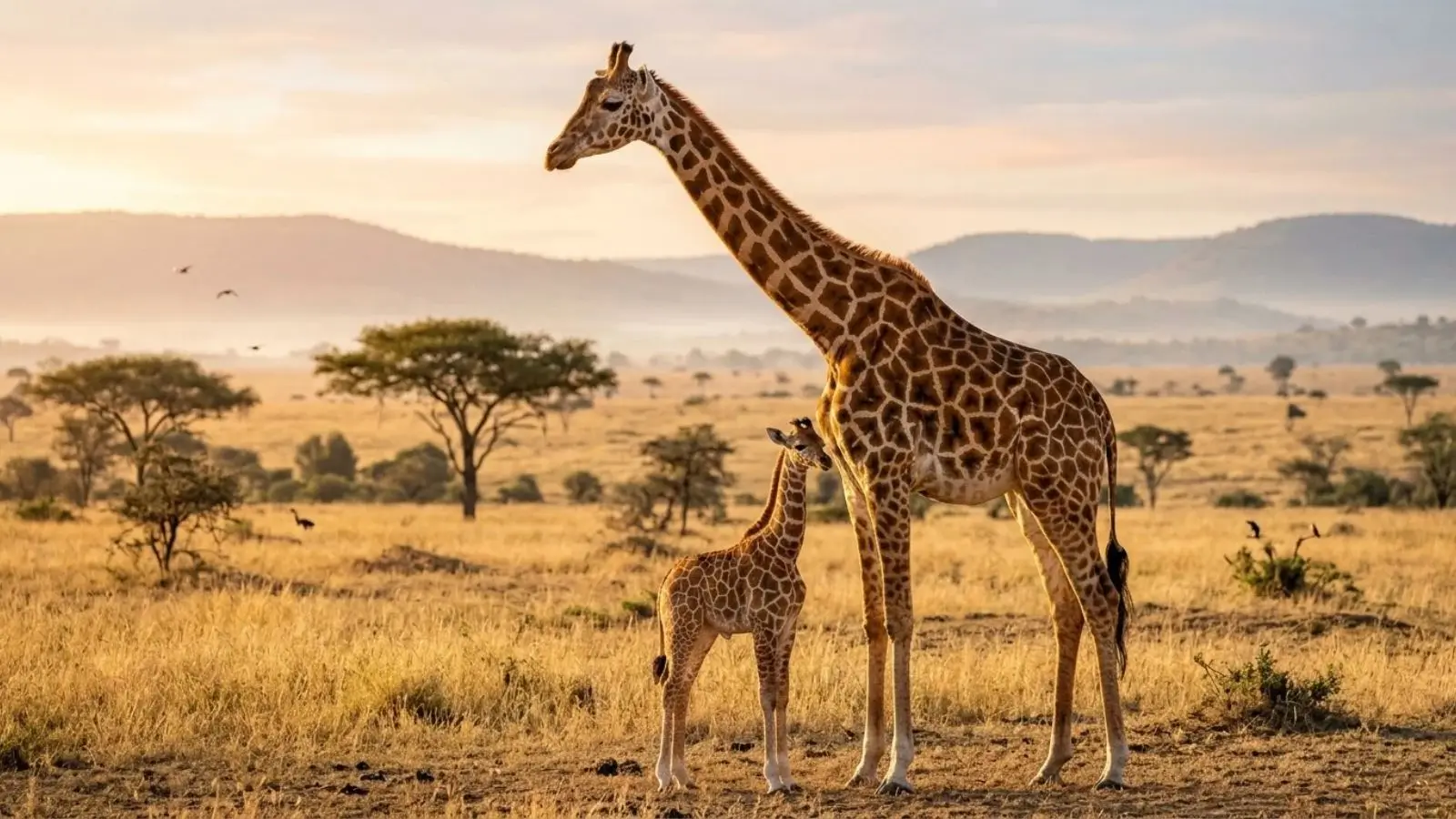
Giraffes are some of the most extraordinary animals on Earth. Their towering height, beautifully patterned coats, and unusually long necks make them instantly recognizable.
Yet beneath their distinctive appearance lies a fascinating world of surprising adaptations, intelligent behavior, and complex social relationships.
Exploring interesting facts about giraffes reveals how these remarkable mammals survive in Africa’s changing landscapes.
From their powerful hearts and specialized tongues to their unique communication methods, every feature serves an important purpose.
Giraffes also play a valuable role in maintaining healthy ecosystems, making their protection essential for wildlife conservation.
In this complete guide, discover amazing giraffe facts, their evolution, physical characteristics, feeding habits, habitats, social behavior, and the conservation challenges they face in 2026.
Quick Facts About Giraffes
| Feature | Details |
| Scientific Genus | Giraffa |
| Animal Family | Giraffidae |
| Animal Type | Mammal |
| Living Species | Four recognized species |
| Native Continent | Africa |
| Natural Habitat | Savannas, grasslands, and open woodlands |
| Average Height | Approximately 14–19 feet (4.3–5.8 meters) |
| Average Weight | Around 680–1,900 kg (1,500–4,200 lbs), depending on sex and species |
| Lifespan | Often 20–25 years in the wild |
| Diet | Leaves, flowers, fruits, and young branches |
| Favorite Food | Acacia and other browse plants |
| Tongue Length | Approximately 18–20 inches (45–50 cm) |
| Running Speed | Up to around 35 mph (56 km/h) over short distances |
| Main Predators | Lions; calves may also face hyenas, leopards, and crocodiles |
| Major Threats | Habitat loss, poaching, and human wildlife conflict |
Background and Overview of Giraffes
Giraffes are the tallest living land animals, recognized by their long legs, elongated necks, and distinctive spotted coats. They belong to the family Giraffidae, which also includes the closely related okapi.
These mammals live in different parts of sub Saharan Africa, where they browse leaves from trees and shrubs. Their height gives them access to vegetation that many other herbivores cannot easily reach.
Although giraffes appear similar at first glance, their coat patterns, geographical ranges, and genetic characteristics vary. A major scientific review recognized four distinct giraffe species in 2025: northern, southern, Masai, and reticulated giraffes.
Giraffes are generally peaceful animals, but their size, speed, eyesight, and powerful legs help them defend themselves against predators. Their feeding habits also influence the vegetation around them, making them important members of African ecosystems.
History and Evolution of Giraffes
The evolutionary history of giraffes stretches back millions of years. Fossils show that ancient members of the giraffe family once lived across parts of Africa, Europe, and Asia.
One of their well known extinct relatives was Sivatherium, a large giraffid with a heavy body and impressive head structures.
Over time, different giraffid lineages developed distinctive physical characteristics as climates and habitats changed.
The evolution of the giraffe’s long neck is particularly interesting. Reaching leaves high in trees may have offered feeding advantages, while competition between males may also have influenced neck development. Scientists continue to investigate how these factors contributed to the feature.
Giraffes have also attracted human attention throughout history. Ancient Egyptians and Romans regarded them as unusual and fascinating animals.
Today, they are important subjects in evolutionary research, wildlife education, and conservation programs.
20 Interesting Facts About Giraffes
1. Giraffes Are the Tallest Land Animals
Giraffes hold the record as the tallest living land animals. Adult males can reach approximately 18 feet or more, while females are generally shorter.
Their impressive height allows them to feed on leaves growing high in trees. This feeding advantage helps them access food that may be unavailable to shorter herbivores.
2. Their Necks Have Only Seven Bones
Despite their extraordinary neck length, giraffes have just seven neck vertebrae, the same number found in humans.
The difference is that each vertebra is greatly elongated. These long bones, together with strong muscles and specialized joints, support the giraffe’s neck while allowing it to move its head and reach vegetation.
3. Every Giraffe Has a Distinctive Coat Pattern
A giraffe’s spots are as individual as a fingerprint. Their shapes, sizes, and arrangements differ from one animal to another.
Researchers can use photographs of these patterns to identify individual giraffes and monitor their movements. Coat patterns also vary between species and geographical populations.
4. Their Hearts Are Exceptionally Powerful
A giraffe needs a strong cardiovascular system to circulate blood through its tall body. Its heart can weigh around 11 kilograms (25 pounds) and generates the pressure required to move blood toward the brain.
Specialized blood vessels and circulation mechanisms help manage changes in blood flow when the giraffe raises or lowers its head. These adaptations are essential for avoiding harmful pressure changes.
5. Giraffes Sleep for Surprisingly Short Periods
Giraffes generally sleep less than many other large mammals. They may rest for only a few hours across a 24 hour period, often in short intervals.
Sleeping in brief periods helps them remain alert to predators. They may rest while standing, although they sometimes lie down and curl their necks into a resting position.
6. Their Tongues Can Reach Around 20 Inches
A giraffe’s tongue is remarkably long and flexible, measuring approximately 18–20 inches. Its dark coloration may help protect it from strong sunlight during long feeding periods.
The tongue works together with thick lips to grasp leaves and pull them from branches. This allows giraffes to feed efficiently, even among thorny vegetation.
7. They Can Feed on Thorny Acacia Trees
Acacia trees are an important food source for many giraffes, even though their branches are covered in sharp thorns.
Their flexible tongues, tough lips, and careful feeding movements help them select leaves while avoiding many of the sharp points. Specialized saliva also helps them process plant material.
8. Newborn Giraffes Experience a Remarkable First Moment
A baby giraffe is born while its mother is standing, so it drops a considerable distance to the ground during delivery.
Despite this dramatic entrance, a healthy calf can usually stand within its first hour. Being able to walk soon after birth is important because young giraffes need to remain close to their mothers and avoid predators.
9. Giraffes Can Go Several Days Without Drinking
Giraffes obtain a significant amount of moisture from the leaves and other vegetation they eat. As a result, they may not need to visit water sources as frequently as some other large mammals.
However, they still need fresh water and will drink when it is available. Their long legs and necks also make the drinking position awkward, requiring them to spread their front legs or bend their knees.
10. Male Giraffes Fight Using Their Necks
Male giraffes sometimes compete for dominance through a behavior called necking.
During these encounters, they swing their heavy necks and heads toward one another. Their small horn like structures, known as ossicones, can make contact during the contest.
These fights may help establish social dominance and access to mating opportunities.
11. Their Kicks Can Defend Them Against Lions
Giraffes have extremely powerful legs. When threatened, an adult can deliver a forceful kick capable of seriously injuring a predator.
Lions sometimes hunt giraffes, but attacking a healthy adult can be dangerous. Young calves are more vulnerable because they lack the size and strength of fully grown animals.
12. Their Excellent Eyesight Helps Them Spot Danger
Giraffes have large eyes positioned on the sides of their heads, giving them a wide field of vision.
Their height also provides a useful advantage across open landscapes. They can often notice approaching predators from a distance and respond before danger gets too close.
13. Giraffes Communicate Through Sounds and Body Language
Giraffes are not completely silent, as scientists once believed. Research has documented vocalizations such as low frequency sounds, snorts, and humming.
They also communicate through posture, movement, scent, and physical contact. Mothers and calves use sounds and other signals to maintain contact, especially when they are separated.
14. Their Long Necks Serve More Than One Purpose
Reaching high branches is an obvious advantage of a giraffe’s long neck, but it is not the only one.
A long neck also gives giraffes a better view of their surroundings and plays a role in competition between males. It helps them monitor potential threats and interact with other members of their species.
15. Their Blood Vessels Help Control Circulation
The difference in height between a giraffe’s heart and brain creates special challenges for blood circulation.
Giraffes have adaptations involving their arteries, blood vessels, and pressure regulating systems. These help maintain blood flow when the animal changes its head position, such as when it bends down to drink.
16. Giraffe Calves Face Serious Survival Challenges
Young giraffes are vulnerable to predators, particularly during their first months of life.
Lions, hyenas, leopards, and crocodiles may prey on calves under certain conditions. Mothers protect their young, while other females may gather with calves in temporary groups that provide additional safety.
17. Giraffes Help Shape Their Natural Environment
Giraffes influence plant growth by feeding on leaves, flowers, and branches. Their browsing can change the shape of trees and create opportunities for other plants to grow.
They also contribute to seed dispersal when they consume fruits and move through their habitat. These activities help maintain ecological diversity.
18. Their Spots May Help With Temperature Regulation
The darker patches on a giraffe’s coat contain complex networks of blood vessels beneath the skin.
Scientists believe these structures may help with heat exchange, although the exact contribution of coat patterns to temperature regulation is still being studied. The spots also provide distinctive camouflage in woodland environments.
19. Ancient Giraffe Relatives Lived Beyond Africa
The modern giraffe’s ancestors and relatives once occupied a much wider geographical range than today’s giraffes.
Fossil discoveries from Europe and Asia show that giraffids were once more widespread. Changes in climate, vegetation, and habitats gradually influenced their distribution, leaving modern giraffes native to Africa.
20. Giraffe Conservation Is More Important Than Many People Realize
Giraffes are sometimes overlooked in wildlife conservation discussions because of their familiar appearance and presence in popular culture.
However, several populations have experienced serious declines. Habitat fragmentation, illegal hunting, human expansion, and conflict over natural resources continue to threaten them.
Protecting giraffes requires scientific monitoring, habitat conservation, responsible land management, and cooperation with communities living near wildlife areas.
Giraffe Behavior and Social Life
Giraffes have flexible social systems rather than permanent herds with strict membership. Individuals may join or leave groups depending on their age, sex, location, and social relationships.
Females often spend time with other females and their calves. These temporary groups can provide protection and opportunities for young animals to interact. Adult males may travel alone or form loose bachelor groups.
Although giraffes are generally calm, they can become defensive when threatened. They rely on their height, eyesight, speed, and powerful kicks to respond to danger.
Giraffe Habitat and Distribution
Giraffes are native to sub Saharan Africa and occupy a range of environments. Their distribution depends on food availability, vegetation, water, and suitable open spaces.
Their habitats include:
- Savannas: Open grasslands with scattered trees.
- Woodlands: Areas with trees and shrubs that provide browsing opportunities.
- Grasslands: Open landscapes where giraffes can observe approaching predators.
- Bushlands: Vegetation rich environments that offer leaves and shelter.
- Dry forests: Woodland habitats where suitable browse plants are available.
Different giraffe species occupy different geographical regions. For example, reticulated giraffes are strongly associated with parts of northeastern Africa, while southern giraffes occur across several countries in southern Africa.
Giraffe Diet and Feeding Habits
Giraffes are herbivores and spend much of their day searching for vegetation. Their long necks and specialized tongues allow them to reach leaves and branches that other animals may struggle to access.
Their diet commonly includes:
- Acacia leaves
- Flowers and seed pods
- Fruits
- Young branches
- Shrubs and other browse plants
An adult giraffe may consume around 30–35 kilograms of vegetation daily, although the amount varies with body size, food availability, and environmental conditions.
Giraffes use their flexible tongues to pull leaves from branches while carefully avoiding thorns. Their feeding behavior helps them obtain nutrients from a wide range of plants.
Why Giraffes Matter to the Environment
Giraffes contribute to the health of African ecosystems in several important ways. By browsing on trees and shrubs, they influence vegetation growth and help shape woodland environments.
They also disperse seeds through their droppings, supporting plant regeneration across their habitats. Their feeding activities can create opportunities for smaller herbivores to access vegetation.
In addition, giraffes support wildlife tourism, which can provide income and employment for communities near protected areas. Their conservation therefore benefits both biodiversity and people.
Conservation Challenges Facing Giraffes
Despite their popularity, giraffes face several threats in the wild. Their conservation needs vary by species and region, making accurate population monitoring particularly important.
Habitat Loss
Agriculture, roads, mining, and expanding settlements can reduce the natural areas giraffes need for food, movement, and breeding.
Human Wildlife Conflict
When giraffes move into agricultural areas or settlements, conflicts may occur over land and resources. Community based conservation can help reduce these problems.
Illegal Hunting
Illegal hunting continues to affect some giraffe populations. Animals may be targeted for their meat, hides, tails, or other body parts.
Climate Change
Changing rainfall patterns and prolonged droughts can affect vegetation and water availability. These changes may make survival more difficult in already challenging environments.
Population Fragmentation
Roads, fences, and human development can separate giraffe populations. Smaller isolated groups may face additional challenges related to genetic diversity and long term survival.
The Four Recognized Giraffe Species
A major taxonomic review published by the IUCN’s Giraffe and Okapi Specialist Group in 2025 recognizes four distinct giraffe species. This updated classification reflects research into genetics, physical characteristics, and geographical distribution.
The four species are:
- Northern Giraffe (Giraffa camelopardalis): Includes the Nubian, Kordofan, and West African subspecies.
- Reticulated Giraffe (Giraffa reticulata): Known for its sharply defined, net like coat pattern.
- Masai Giraffe (Giraffa tippelskirchi): Recognized by its irregular, leaf like spots and native to parts of East Africa.
- Southern Giraffe (Giraffa giraffa): Includes the South African and Angolan subspecies.
This distinction matters because each species has a different distribution and conservation situation. The updated classification will help guide future species level assessments and protection strategies. <Cite refs={[“turn432576search0″,”turn432576search2”]}/>
Where Can You See Giraffes in the Wild?
Several African national parks and protected areas offer opportunities to observe giraffes in their natural habitats.
- Maasai Mara National Reserve, Kenya: Known for its diverse wildlife and open savanna landscapes.
- Amboseli National Park, Kenya: Offers opportunities to see giraffes alongside elephants, with Mount Kilimanjaro in the background.
- Serengeti National Park, Tanzania: Supports giraffes across a vast ecosystem of grasslands and woodlands.
- Etosha National Park, Namibia: Known for wildlife viewing in a distinctive semi arid environment.
- Kruger National Park, South Africa: Provides habitat for southern giraffes and many other African species.
- Chobe National Park, Botswana: Offers excellent opportunities to observe wildlife in riverine and woodland habitats.
Responsible wildlife tourism helps support protected areas and local conservation programs. Visitors should observe animals from a safe distance and avoid feeding or disturbing them.
FAQS
Why do giraffes have such long necks?
Their long necks help them reach vegetation high in trees, observe their surroundings, and compete with other males. Food access and sexual competition are both considered important factors in neck evolution.
How fast can a giraffe run?
A healthy adult giraffe can reach approximately 35 miles (56 kilometers) per hour over short distances. Its long legs allow it to cover considerable ground while escaping danger.
Are giraffes friendly to humans?
Giraffes are generally calm wild animals, but they are not domesticated pets. They can become defensive and deliver powerful kicks, so people should always observe them from a safe distance.
What do giraffes eat most?
Giraffes mainly eat leaves from trees and shrubs, particularly acacia species. Their diet can also include flowers, fruits, seed pods, and young branches.
How many giraffe species are there?
The IUCN Giraffe and Okapi Specialist Group’s 2025 taxonomic review recognizes four species: northern, southern, Masai, and reticulated giraffes.
Why are giraffes threatened?
Habitat loss, illegal hunting, human wildlife conflict, and fragmented populations are among their major threats. Conservation programs focus on protecting habitats, monitoring populations, and working with local communities.
Conclusion
These interesting facts about giraffes reveal that their extraordinary height is only one part of what makes them special.
Their powerful hearts, flexible tongues, distinctive coat patterns, and remarkable adaptations allow them to survive in challenging African environments.
Beyond their physical features, giraffes play an important role in shaping vegetation, supporting biodiversity, and maintaining healthy ecosystems. Yet several populations continue to face serious conservation challenges.
Understanding these remarkable animals is an important step toward protecting them. Through responsible wildlife tourism, habitat conservation, and community involvement, we can help ensure that future generations continue to see giraffes thriving in the wild.
Discover More Post
- Interesting Facts About Penguins: 20 Amazing Wonders
- 29 Interesting Facts About Wolves: Wild Secrets (2026)
- Interesting Facts About Elephant: 20 Amazing Discoveries (2026)

I’m Noah Richardson, a writer and fact finder who enjoys investigating topics from different angles. I’m especially interested in the details people often overlook and the surprising information hidden inside familiar subjects. My work at Factopea is about making those discoveries accessible through straightforward, engaging writing. I take pride in researching each topic carefully and presenting the information in a way that respects the reader’s time and curiosity.
Books: The Fact Finder’s Handbook and More Than Meets the Eye