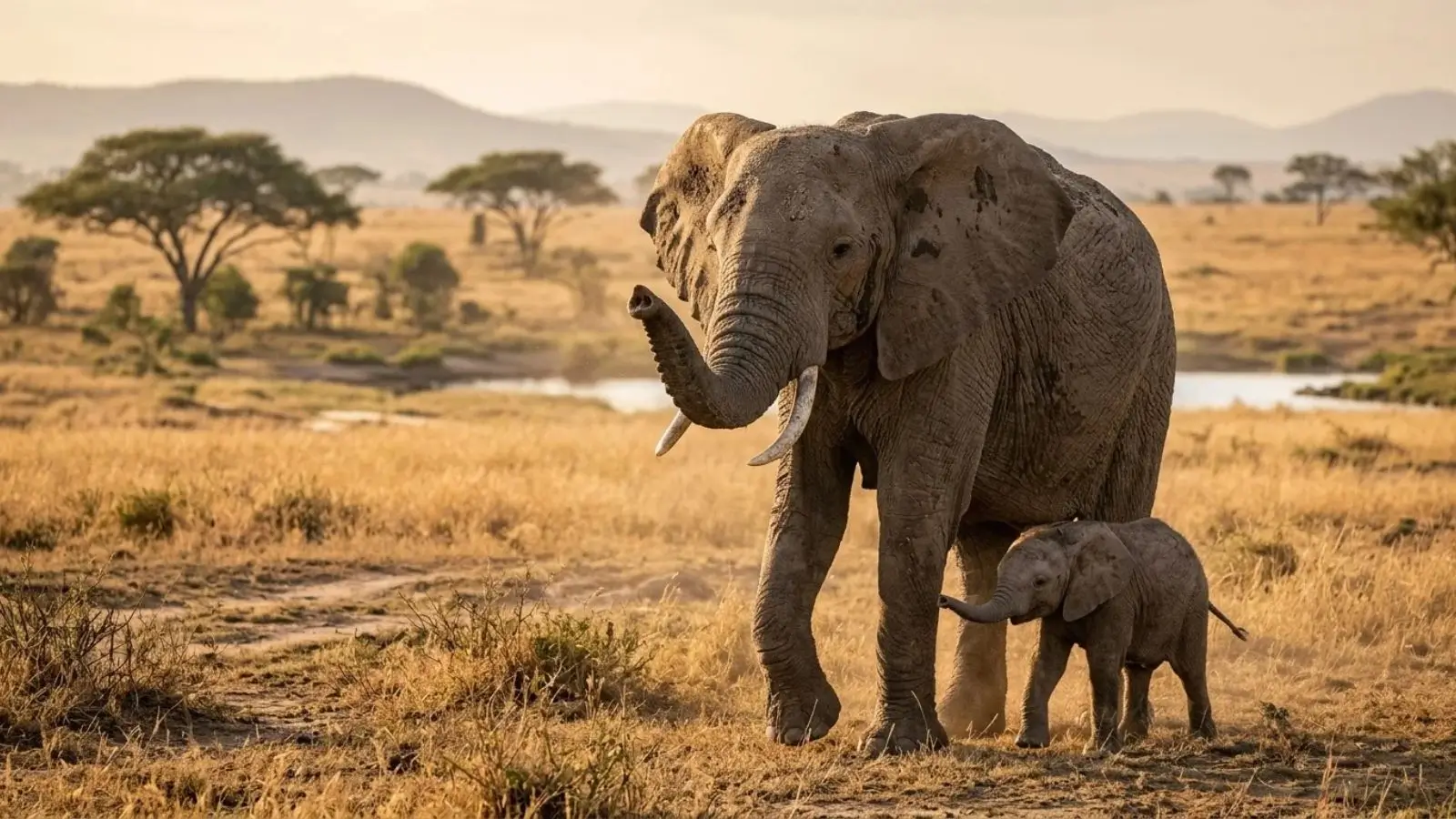
Elephants are some of the most extraordinary animals on Earth. Known for their impressive size, remarkable intelligence, and strong family relationships, these gentle giants have fascinated people for generations.
From the open grasslands of Africa to the forests of Asia, elephants play an important role in the natural world.
Exploring interesting facts about elephants reveals much more than their physical strength. These animals have complex social lives, communicate through sounds and vibrations, remember familiar individuals, and help maintain healthy ecosystems.
Their behavior also provides scientists with valuable insights into animal intelligence and social cooperation.
In this guide, discover fascinating elephant facts, their history and evolution, unique characteristics, habitats, cultural importance, and the conservation challenges they face in 2026.
Quick Facts About Elephants
| Feature | Details |
| Scientific Family | Elephantidae |
| Living Species | African Bush Elephant, African Forest Elephant, Asian Elephant |
| Animal Type | Mammal |
| Diet | Herbivore |
| Natural Habitats | Savannas, forests, grasslands, and wetlands |
| Native Continents | Africa and Asia |
| Average Lifespan | Often around 60–70 years in the wild, although it varies |
| Largest Living Species | African Bush Elephant |
| Maximum Height | Around 13 feet (4 meters) at the shoulder |
| Maximum Weight | Up to approximately 7,000 kg (15,400 lbs) |
| Pregnancy Duration | Approximately 22 months |
| Daily Food Intake | Can reach around 300 pounds (136 kg) |
| Water Consumption | May reach around 50 gallons (190 liters) daily |
| Main Threats | Habitat loss, poaching, and human-wildlife conflict |
| Conservation Status | African Bush Elephant: Endangered; African Forest Elephant: Critically Endangered; Asian Elephant: Endangered |
Background and Overview of Elephants
Elephants are the largest living land mammals and belong to the family Elephantidae. Their most recognizable features include long trunks, large ears, thick legs, and, in many individuals, impressive tusks.
There are three living elephant species: the African Bush Elephant, African Forest Elephant, and Asian Elephant.
African Bush Elephants generally live in savannas and open landscapes, while African Forest Elephants inhabit the dense forests of Central and West Africa. Asian elephants are found in parts of South and Southeast Asia.
Elephants are often called ecosystem engineers because their everyday activities can change entire landscapes.
They spread seeds, create pathways through vegetation, dig for water, and influence the growth of forests and grasslands. These activities provide important benefits to other wildlife.
Their intelligence, communication skills, and close family relationships also make them especially interesting to researchers studying animal behavior.
History and Evolution of Elephants
The evolutionary history of elephants stretches back more than 50 million years. Their distant ancestors were much smaller than modern elephants and gradually developed different body shapes and features as they adapted to changing environments.
Over millions of years, numerous elephant relatives appeared across Africa, Europe, Asia, and North America. Some eventually developed the large bodies, specialized teeth, and trunks associated with modern elephants.
The woolly mammoth is one of the most famous extinct relatives. It lived in cold environments during the Ice Age and had thick fur and long curved tusks. Mammoths were closely related to modern elephants, particularly Asian elephants.
Elephants have also influenced human history. Ancient societies in India, Persia, and Southeast Asia used them in ceremonies, transportation, construction, and warfare. Hannibal’s famous journey across the Alps with war elephants remains one of the best-known examples of their historical use.
Today, their ecological importance and conservation needs receive greater attention worldwide.
20 Interesting Facts About Elephants
1. Elephants Have the Longest Pregnancy of Any Land Mammal
An elephant’s pregnancy lasts approximately 22 months, making it the longest among living land mammals. This extended development period allows a calf’s body and brain to grow significantly before birth.
Newborn elephants can usually stand and walk shortly after arriving in the world. They depend on their mothers and other herd members for milk, protection, and guidance during their early years.
2. An Elephant’s Trunk Has Around 40,000 Muscle Bundles
The trunk is one of the most remarkable features of an elephant. It is a flexible combination of the nose and upper lip, containing tens of thousands of muscle bundles.
Elephants use their trunks to breathe, smell, drink, pick up food, communicate, and explore their surroundings. The trunk is strong enough to move heavy objects but sensitive enough to collect small pieces of food.
3. Elephants Have Demonstrated Mirror Self-Recognition
Some elephants have shown behaviors associated with self-awareness during mirror experiments. Researchers observed elephants examining marks on their bodies using a mirror, suggesting that they could recognize their reflections.
Mirror self-recognition is a challenging ability to demonstrate, and only a limited number of animal species have passed similar tests. These findings provide valuable clues about elephant cognition.
4. They Communicate Through Low-Frequency Sounds
Elephants produce different vocal sounds, including deep rumbles that can contain low-frequency components below the range of normal human hearing.
These sounds can travel over considerable distances, helping elephants communicate with other members of their groups. They also use body movements, touch, scent, and ground vibrations to share information.
5. Experienced Females Lead Elephant Families
Elephant families are generally organized around a mature female known as the matriarch. She guides the herd toward food and water and helps the group respond to potential dangers.
Her experience is particularly valuable during difficult conditions, such as droughts or changes in the availability of resources. Younger elephants learn important survival skills by observing her behavior.
6. Elephants Have Remarkable Long-Term Memories
Elephants can remember familiar individuals, locations, and important environmental routes. Their ability to recognize other elephants and recall previously visited water sources can help them survive in challenging conditions.
Memory is especially important for older matriarchs, whose experience can guide family groups during seasonal movements and environmental changes.
7. They May Detect Distant Storms
Elephants have highly developed senses and may detect environmental signals associated with distant thunderstorms. Researchers have investigated how low-frequency sounds and ground vibrations help them notice activity beyond their immediate surroundings.
Such sensitivity may help elephants locate areas where rain has fallen or where water could become available.
8. Elephants Show Behaviors Associated With Grief
Elephants sometimes gather around deceased companions and gently touch their bodies or bones with their trunks. Some remain near a dead family member for extended periods.
Scientists interpret these observations as evidence of complex social and emotional behavior. Although animal emotions cannot always be understood in exactly the same way as human emotions, these actions demonstrate the importance of social relationships in elephant communities.
9. Their Large Ears Help Keep Them Cool
Elephant ears are more than just a distinctive physical feature. They contain an extensive network of blood vessels that helps release body heat.
When elephants flap their ears, air moves across their surfaces and helps cool the blood circulating inside. This adaptation is particularly useful in the hot environments where many African elephants live.
10. African and Asian Elephants Look Different
African and Asian elephants have several noticeable physical differences.
African elephants generally have larger ears, while Asian elephants have smaller, more rounded ears. African Bush Elephants are also typically larger than Asian elephants. Their head shapes, back profiles, and tusk characteristics can differ as well.
These features help researchers and wildlife observers distinguish between the species.
11. Elephants Help Forests Grow
Elephants eat fruits and other plant material, then spread seeds through their droppings as they travel. This process allows certain plants to grow far away from their original locations.
Some tree species benefit significantly from this natural seed dispersal. By helping plants spread, elephants contribute to forest regeneration and biodiversity.
12. Young Elephants Learn Through Play
Elephant calves are naturally curious and often spend time chasing one another, wrestling, splashing in water, and experimenting with their trunks.
Play helps young elephants develop coordination, social awareness, and physical skills. It also allows them to learn how to interact with other members of their herd.
13. Elephants Are Excellent Swimmers
Despite their enormous bodies, elephants can swim surprisingly well. They use their legs to move through water while their trunks can function like snorkels when they need to breathe at the surface.
Swimming helps elephants cross rivers and other water channels while traveling between different parts of their habitat.
14. They Comfort Distressed Herd Members
Researchers have observed elephants responding to distressed companions by touching them with their trunks, making gentle sounds, or standing close to them.
These supportive behaviors suggest that elephants are sensitive to the emotional states of other members of their groups. Their close family relationships play an important role in everyday social life.
15. Their Feet Absorb the Impact of Their Weight
An elephant’s feet contain thick, flexible tissue that helps distribute its enormous body weight. This natural cushioning reduces the impact of each step and supports movement across different types of ground.
Although elephants are extremely heavy, they can move with surprising control and often walk more quietly than people expect.
16. Elephants Spend Much of Their Day Eating
An adult elephant may spend up to 16–18 hours a day searching for and consuming food. Its diet includes grasses, leaves, bark, roots, fruits, and branches.
Because their bodies require large amounts of energy, elephants must eat frequently. The exact amount depends on their size, habitat, season, and food availability.
17. They Can Use Simple Tools
Elephants have been observed using branches to scratch parts of their bodies and swat insects. Some also modify objects or use vegetation to solve practical problems.
These behaviors demonstrate their ability to explore their surroundings and adapt objects for specific purposes.
18. Elephants Can Recognize Different Voices
Elephants use vocal communication to maintain social connections. Research suggests they can distinguish between familiar and unfamiliar calls and may recognize individual voices.
They can also respond differently to certain human voices, which may help them identify people or situations associated with potential danger.
19. Their Skin Is Sensitive Despite Its Thickness
Elephant skin can appear extremely tough, but it is sensitive and needs protection from heat, insects, and irritation.
Mud baths and dust bathing help elephants protect their skin. Mud can provide a natural barrier against insects and sunlight while helping retain moisture.
20. Elephants Shape Entire Ecosystems
Elephants influence their surroundings in several ways. They create pathways through dense vegetation, spread seeds, remove branches, and sometimes dig for underground water.
These activities can benefit other animals by creating access to food, water, and open spaces. Their influence on the environment is one reason elephants are considered important ecosystem engineers.
Elephant Culture and Social Life
Elephant societies are built around strong family relationships and cooperation. Female elephants often remain with their family groups throughout their lives, while many males leave their birth herds as they mature.
A typical family group includes related females and their young calves. Members help protect one another, locate resources, and care for younger elephants.
Communication is equally important. Elephants use vocal calls, body language, touch, scent, and vibrations to exchange information. Calves learn many essential behaviors by observing older members of their families.
These long-lasting relationships make elephant societies among the most socially complex in the animal kingdom.
Special Features That Make Elephants Unique
Several physical and behavioral characteristics distinguish elephants from other land mammals:
- Their trunks combine breathing, smelling, drinking, and grasping functions.
- Their large ears help release excess body heat.
- Their strong legs support their enormous body weight.
- Their tusks can help with digging, lifting, and defense.
- Their brains support advanced learning and social behavior.
- Their long development period allows calves to learn from experienced family members.
- Their sensitive feet help them move across different landscapes.
Together, these features make elephants exceptionally well adapted to their environments.
Famous Places to See Elephants in the Wild
Wild elephants can be observed in several protected areas across Africa and Asia. These destinations are known for their wildlife populations and natural landscapes.
- Amboseli National Park, Kenya: Famous for its African elephants and views of Mount Kilimanjaro.
- Chobe National Park, Botswana: Known for its large elephant population and river-based wildlife experiences.
- Minneriya National Park, Sri Lanka: Recognized for seasonal gatherings of Asian elephants.
- Kaziranga National Park, India: Protects Asian elephants alongside rhinoceroses and other wildlife.
- Khao Yai National Park, Thailand: Offers opportunities to observe wild elephants in forest habitats.
Visitors should choose responsible wildlife experiences that respect natural behavior and avoid activities involving riding, forced performances, or direct contact with wild animals.
Why Elephants Matter to Nature and Humans
Elephants play an important role in maintaining healthy ecosystems. Their movement through forests and grasslands creates pathways that other animals can use. Their feeding habits influence vegetation, while their droppings help spread seeds and return nutrients to the soil.
They can also dig for water during dry periods, creating access points that may benefit smaller animals. These natural activities support biodiversity and help maintain ecological balance.
Elephants also contribute to local economies through responsible wildlife tourism. National parks and conservation projects can create employment opportunities while encouraging communities to protect natural habitats.
However, elephants continue to face serious threats, including habitat destruction, illegal ivory trade, and conflicts with people. Protecting them requires habitat conservation, effective wildlife laws, community involvement, and international cooperation.
FAQS
What is the most interesting fact about elephants?
One of the most fascinating facts is that an elephant’s trunk contains around 40,000 muscle bundles. This remarkable structure allows it to perform delicate tasks, lift objects, collect food, and communicate.
How intelligent are elephants?
Elephants are highly intelligent animals. They demonstrate problem-solving abilities, social learning, long-term memory, cooperation, and behaviors associated with self-awareness.
Why are elephants called ecosystem engineers?
Elephants are called ecosystem engineers because they change their surroundings through feeding, seed dispersal, digging for water, and creating pathways through vegetation. These activities benefit many other species.
How many elephant species exist today?
There are three living elephant species: the African Bush Elephant, African Forest Elephant, and Asian Elephant. Each has distinct physical characteristics and habitat preferences.
Why are elephants endangered?
Elephants face threats from habitat loss, poaching, illegal ivory trade, and human-wildlife conflict. Their conservation depends on protecting habitats and reducing threats to wild populations.
Can elephants recognize humans?
Yes. Research indicates that elephants can distinguish between different human voices and may remember people they have encountered before. Their ability to recognize familiar individuals can influence how they respond to people.
Conclusion
These interesting facts about elephants reveal why these remarkable animals deserve our attention and protection.
Their extraordinary trunks, impressive memories, complex family relationships, and ability to shape entire ecosystems make them truly unique.
From their ancient evolutionary history to their importance in modern conservation, elephants continue to teach us about intelligence, cooperation, and the natural world.
Protecting these gentle giants means preserving more than a single species. It also means supporting the forests, grasslands, and countless other forms of life that depend on healthy ecosystems.
Discover More Post
- 25 Interesting Facts About Sea Turtles: Ocean Wonders (2026)
- Interesting Facts About Penguins: 20 Amazing Wonders
- 29 Interesting Facts About Wolves: Wild Secrets (2026)

I’m William Parker, a content writer with a strong interest in facts, knowledge, and the stories behind the information we encounter every day. I enjoy researching topics that make people stop and think, especially unusual facts, history, science, technology, and human culture. I believe learning becomes much more enjoyable when information is presented in a simple and relatable way.
Books by William Parker:
- The Ultimate Book of Interesting Facts
- Inside the World of Knowledge