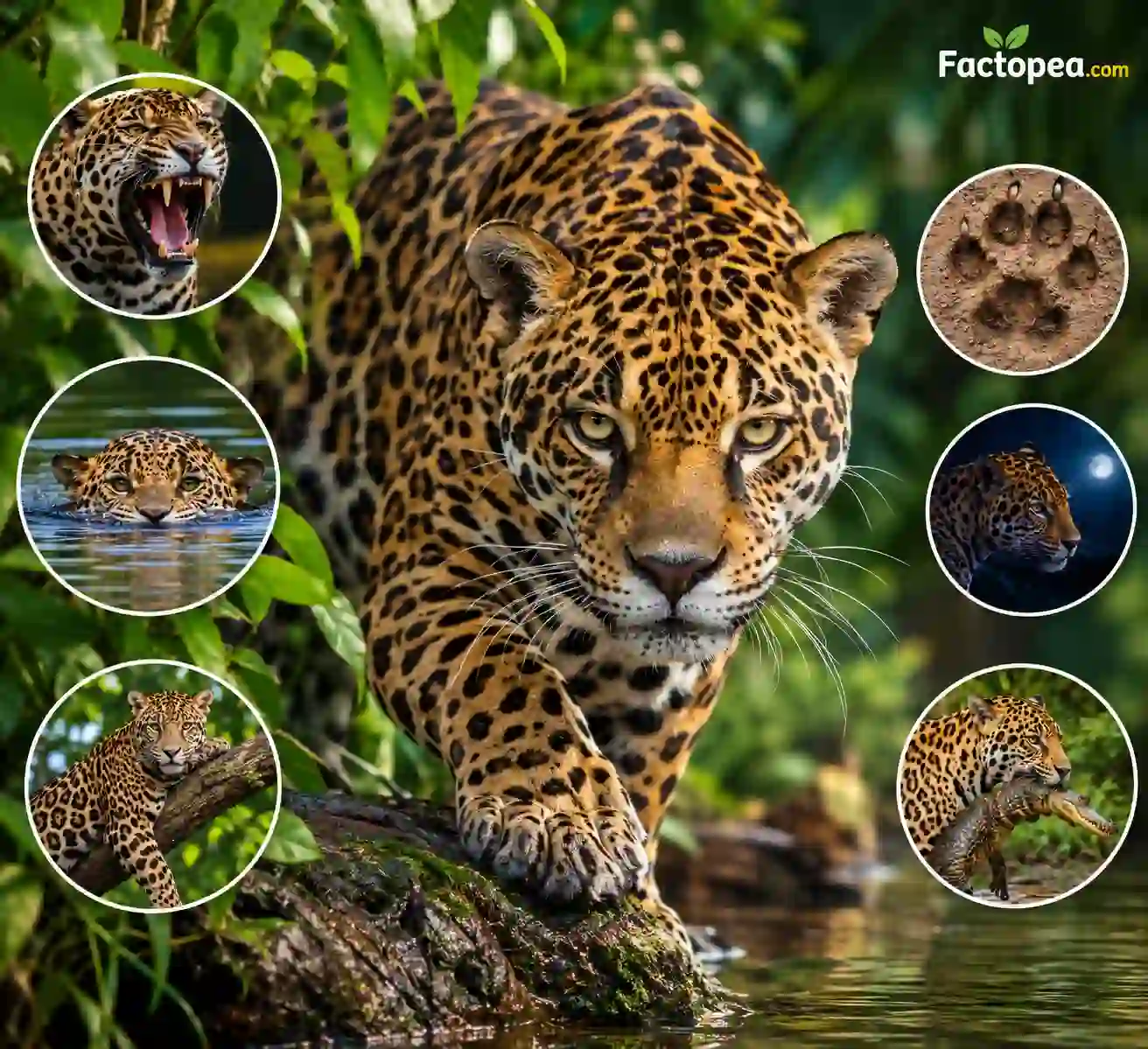
Jaguars are among the most powerful and fascinating wild cats in the world. Known for their muscular bodies, distinctive spotted coats, and remarkable hunting abilities, these elusive predators have captured human imagination for thousands of years. Yet there is much more to jaguars than their strength and striking appearance.
From their powerful jaws and impressive swimming skills to their role in maintaining healthy ecosystems, jaguars have several characteristics that set them apart from other big cats. Exploring jaguar facts helps us understand how these animals survive, hunt, communicate, and adapt to changing environments.
If you are researching wildlife for a school project, preparing an educational article, or simply curious about these magnificent animals, this guide explores jaguar animal facts, their natural history, habitat, behavior, diet, and conservation. You will also discover fascinating facts that explain why jaguars are so important to the natural world.
Quick Facts About Jaguars
| Feature | Details |
| Scientific name | Panthera onca |
| Common name | Jaguar |
| Animal family | Felidae |
| Class | Mammalia |
| Average weight | Often around 100–250 pounds (45–113 kg), depending on sex and region |
| Body length | Approximately 3.5–6 feet, excluding the tail, with considerable variation |
| Lifespan | Commonly around 12–15 years in the wild; sometimes longer in captivity |
| Diet | Carnivorous |
| Main habitats | Tropical forests, wetlands, grasslands, and dry scrublands |
| Geographic range | Central and South America, with occasional individuals reaching the southwestern United States |
| Hunting style | Primarily stalking and ambush |
| Conservation status | Near Threatened globally |
| Major threats | Habitat loss, poaching, declining prey, and conflict with livestock farmers |
Jaguar Background and Evolution
Jaguars belong to the genus Panthera, the group of large cats that also includes lions, tigers, leopards, and snow leopards. They are the largest native wild cats in the Americas and generally rank third in size among the world’s big cats, after tigers and lions.
Scientists believe the ancestors of modern jaguars reached the Americas through ancient migration from Eurasia. Over time, jaguars evolved into powerful, adaptable predators capable of living in a variety of environments, from tropical rainforests to seasonally flooded wetlands.
Their physical design reflects their hunting lifestyle. Jaguars have broad heads, strong jaws, muscular shoulders, and sturdy limbs. These features help them overpower prey and deliver a powerful bite. Their coats, covered in dark rosettes, also provide camouflage among vegetation, shadows, and dappled sunlight.
Jaguars once occupied a much wider range, extending into parts of what is now the southwestern United States. Today, most populations live in Central and South America, with the Amazon Basin supporting a particularly important stronghold.
Jaguar Habitat: Where Jaguars Live and Thrive
Understanding jaguar habitat is essential to understanding how these big cats survive. Jaguars need access to prey, water, shelter, and enough connected land to establish territories and find mates.
1. Tropical Rainforests
Tropical rainforests, particularly the Amazon, provide some of the most important habitat for jaguars. Dense vegetation offers cover for stalking prey, while rivers and forest clearings create opportunities for hunting.
These forests also support a wide variety of animals, including capybaras, peccaries, deer, and other potential prey. Healthy rainforest ecosystems therefore help sustain jaguar populations.
2. Wetlands and Floodplains
Wetlands are another important environment for jaguars. Brazil’s Pantanal, one of the world’s largest tropical wetland regions, is especially well known for jaguar sightings.
Seasonal flooding creates diverse feeding opportunities, and animals such as capybaras and caimans can become important prey. The combination of open landscapes and waterways can also make jaguars easier to observe here than in dense rainforest.
3. Grasslands and Dry Forests
Although jaguars are strongly associated with tropical forests, they can also live in grasslands, dry forests, and scrubland when sufficient prey and cover are available.
Their survival in these different environments demonstrates their adaptability. However, not every landscape can support a stable population; suitable habitat must also provide enough food, water, and space.
4. Where Are Jaguars Found Today?
Jaguars range across parts of Mexico, Central America, and much of South America. The Amazon region remains a major stronghold, while the Pantanal supports important populations as well.
In the United States, jaguars historically occupied parts of Arizona, New Mexico, Texas, and other southwestern areas. Today, jaguar appearances north of the Mexican border are rare, and long term recovery depends on habitat connectivity, prey availability, and conservation measures.
28 Interesting Jaguar Facts
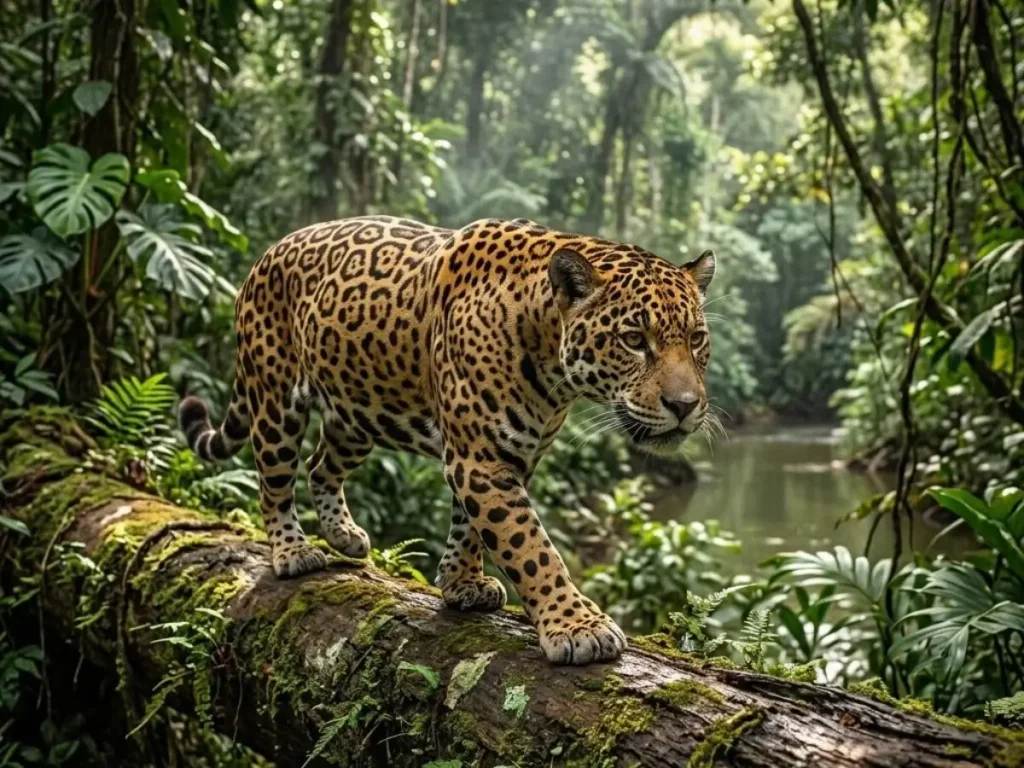
1. Jaguars Have Exceptionally Powerful Bites
Jaguars have one of the most powerful bites relative to body size among big cats. Their robust jaws and large canine teeth help them subdue prey, crack some hard protective coverings, and deliver forceful bites.
Unlike many cats, jaguars may bite through the skull of certain prey animals. This hunting adaptation is one of the most distinctive features of their predatory behavior.
2. Jaguars Prefer Ambush Hunting
Jaguars generally rely on stealth rather than prolonged high speed chases. They move carefully through vegetation, approach prey quietly, and attack when the opportunity is right.
This strategy helps them conserve energy and take advantage of their muscular bodies. Dense vegetation, riverbanks, and forest edges can all provide useful places from which to launch an ambush.
3. Jaguars Are Excellent Swimmers
Many domestic cats dislike water, but jaguars are comfortable swimming. They frequently move through rivers, wetlands, and flooded forests while searching for prey or traveling between areas.
Their aquatic abilities are particularly useful in environments such as the Pantanal and Amazon Basin, where waterways form a major part of the landscape.
4. Every Jaguar Has a Distinctive Coat Pattern
A jaguar’s coat contains dark markings known as rosettes. These are ring like patterns that often contain smaller spots in their centers.
The arrangement of these markings varies between individuals. Researchers can sometimes use coat patterns to identify individual jaguars from camera trap photographs, helping them monitor populations without capturing the animals.
5. Black Jaguars Still Have Rosettes
Some jaguars have melanism, a genetic condition that causes unusually dark pigmentation. These animals are commonly called black panthers, although they are still jaguars rather than a separate species.
Look closely under suitable lighting and their rosette patterns may still be visible beneath the dark coat. Melanistic jaguars demonstrate how genetic variation can create striking differences within the same species.
6. Jaguars Eat a Wide Variety of Animals
Jaguars are adaptable carnivores with a diverse diet. Depending on their location, they may hunt deer, capybaras, peccaries, armadillos, monkeys, birds, reptiles, fish, turtles, and caimans.
Their diet changes with local prey availability. This flexibility allows jaguars to survive in different habitats, although losing important prey species can still put pressure on local populations.
7. Their Hunting Technique Differs From That of Many Other Cats
Many large cats commonly attack the throat or neck to subdue prey. Jaguars are known for using powerful bites to the head or skull in some hunting situations.
However, their exact technique depends on the prey species and circumstances. Their strong jaws, muscular build, and ability to deliver a controlled ambush make them formidable hunters.
8. Jaguars Help Maintain Ecological Balance
As apex predators, jaguars influence the populations and behavior of other animals. By hunting certain herbivores and smaller predators, they can affect how energy moves through an ecosystem.
Their presence is not the only factor that keeps an ecosystem healthy, but jaguars are an important part of the ecological relationships that support biodiversity.
9. Jaguars Usually Live Alone
Adult jaguars are generally solitary. They spend most of their lives hunting and moving through their own home ranges rather than living in groups.
Males and females come together to mate, while mothers care for their cubs. Territory size varies considerably depending on prey availability, habitat quality, and the density of other jaguars nearby.
10. Jaguars Produce Distinctive Vocal Sounds
Jaguars can make deep, rough calls often described as roars or cough like vocalizations. These sounds may help individuals communicate over distance, particularly during territorial interactions or mating periods.
They also use scent marking and other signals to communicate. These methods help reduce unnecessary encounters between animals that generally prefer to live alone.
11. Their Spotted Coats Provide Natural Camouflage
A jaguar’s golden or yellowish coat, combined with dark rosettes, breaks up the outline of its body. This pattern can help the animal blend into vegetation, leaf litter, and patches of sunlight and shadow.
Camouflage is especially useful when approaching prey at close range. A jaguar may remain difficult to notice even when it is relatively near, provided the surroundings offer suitable cover.
12. Jaguars Can Climb Trees
Jaguars are capable climbers, although they spend much of their time hunting and traveling on the ground. They may climb to rest, explore their surroundings, or move through particular types of terrain.
Their strong limbs and claws help them navigate trees when needed. If a jaguar climbs depends on its environment, behavior, and the opportunities available.
13. Jaguar Mothers Teach Their Cubs to Survive
Jaguar cubs depend on their mothers for protection, nourishment, and early survival skills. As they grow, they gradually learn how to recognize prey, move through their environment, and develop hunting abilities.
Young jaguars eventually become independent, but the timing varies. The mother provides the care that cubs need during a vulnerable stage of life.
14. Jaguars Once Roamed Parts of the United States
The jaguar’s historical range extended farther north than its current regular distribution. Jaguars once occurred in parts of the southwestern United States, including areas of Arizona and New Mexico.
Today, sightings north of the Mexican border are uncommon. Habitat changes and other pressures contributed to the species’ disappearance from much of its former northern range.
15. Jaguars Were Important in Ancient Civilizations
Jaguars held deep cultural and spiritual significance for several Indigenous civilizations of the Americas. Maya, Aztec, and Olmec traditions included jaguar imagery associated with strength, authority, warfare, and spiritual power.
Jaguar designs appear in ancient sculptures, pottery, architecture, and ceremonial objects. These cultural connections reflect the animal’s long standing influence on human societies across the region.
16. Jaguars Can Move Quietly While Hunting
A jaguar’s padded feet and controlled movements help it approach prey without drawing attention. Instead of rushing through the forest, it often moves slowly and carefully, using cover to conceal its position.
This quiet approach is a major advantage for a predator that depends heavily on ambush. A successful hunt may begin long before the prey realizes that a jaguar is nearby.
17. Some Jaguars Have Very Large Home Ranges
Jaguars need enough space to find food, water, shelter, and potential mates. Their home ranges can be extensive, especially where prey is scattered or habitat is less productive.
Males often occupy larger ranges than females, although there is substantial variation between regions. Habitat fragmentation can make it harder for jaguars to move safely between suitable areas.
18. Jaguars Can Drag Heavy Prey
Jaguars have strong necks, shoulders, and forelimbs that help them move prey after a successful hunt. Depending on the prey’s size and the terrain, they may drag a carcass away from the original hunting site.
This strength can help a jaguar reach a safer feeding location or move its meal through vegetation. The distance and weight it can manage depend on the animal and surrounding conditions.
19. Jaguars Are Well Adapted to Low Light Conditions
Jaguars have eyes adapted for seeing in dim light. Like other cats, they possess a reflective layer behind the retina called the tapetum lucidum, which helps make better use of available light.
This adaptation supports activity during dawn, dusk, and nighttime. However, jaguars are not exclusively nocturnal; their activity patterns vary according to location, prey, and human disturbance.
20. Protecting Jaguars Can Benefit Entire Ecosystems
Jaguars require healthy landscapes that support prey, provide cover, and allow animals to move between habitats. Protecting these areas can also benefit countless other species that share the same forests, wetlands, and grasslands.
Conservation efforts that maintain wildlife corridors, reduce illegal killing, and encourage coexistence with local communities can improve the long term prospects for jaguars and other wildlife.
Jaguars in Indigenous Culture and Traditions
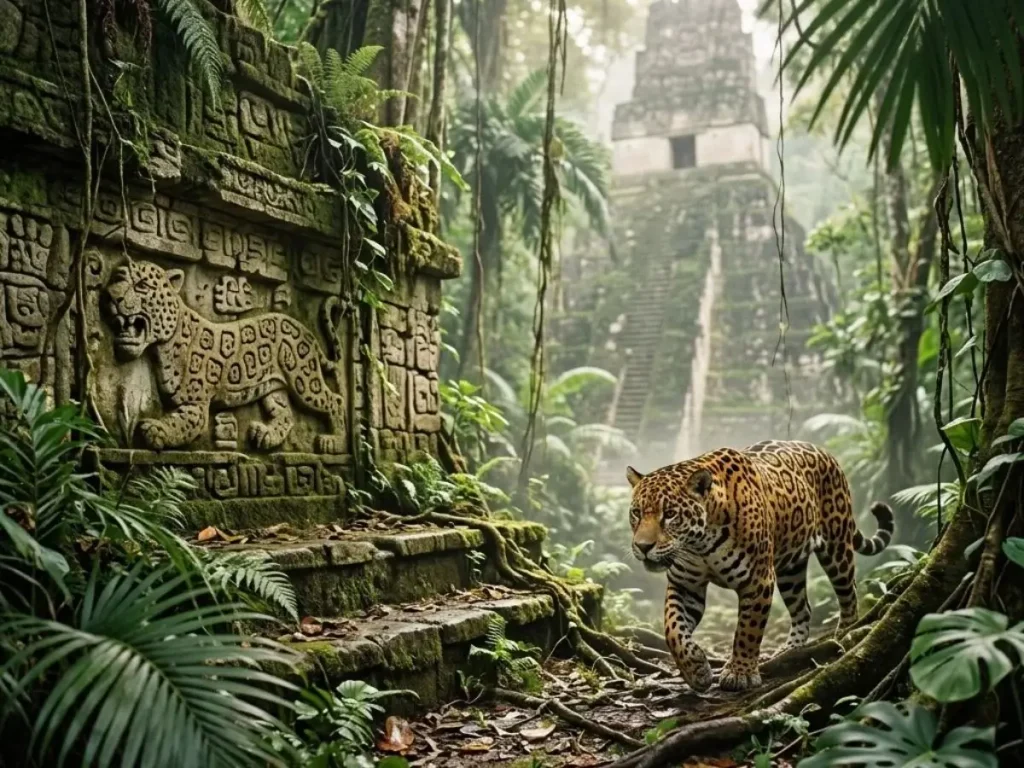
Jaguars have influenced the cultures of Central and South America for thousands of years. In various Maya traditions, they were connected with power, the night, and the spiritual world. Aztec society also associated jaguars with courage and elite warriors.
The Olmec and other ancient cultures created artworks featuring jaguar like figures and imagery. These representations show how closely the animal was connected with ideas of authority, strength, and the natural world.
Jaguars continue to hold cultural importance for many Indigenous communities today. Stories, traditional knowledge, and local relationships with the land contribute to how jaguars are understood and protected.
It is important to recognize that Indigenous cultures are diverse. Their beliefs and traditions are not identical, and contemporary communities may understand the jaguar in different ways.
Where Can You See Jaguars in the Wild?
Jaguars are naturally elusive, so seeing one in the wild is never guaranteed. Nevertheless, certain protected areas are known for supporting populations and offering responsible wildlife viewing opportunities.
The Pantanal, Brazil
The Pantanal is widely regarded as one of the best places to look for wild jaguars. Its seasonal wetlands and relatively open landscapes can make sightings easier than in dense rainforest.
Wildlife tours may offer opportunities to observe jaguars from boats or designated viewing areas. Visitors should follow local guides’ instructions, keep a safe distance, and avoid disturbing the animals.
The Amazon Rainforest
The Amazon Basin supports a major stronghold of jaguars and contains extensive areas of suitable habitat. However, dense vegetation makes them difficult to spot.
Responsible guided trips may offer wildlife viewing opportunities, but sightings depend on the location, season, and local conditions.
Belize
Belize contains important forest habitat for jaguars. The Cockscomb Basin Wildlife Sanctuary is particularly well known for jaguar conservation and is often described as the world’s first jaguar preserve.
Although jaguars live in the sanctuary, they are secretive animals, so visitors are much more likely to experience their habitat than to see one directly.
Mexico
Mexico is an important part of the jaguar’s northern range. Protected areas and connected landscapes help support populations and maintain links between habitats in Mexico and Central America.
Conservation work in this region is especially important because habitat connectivity can help jaguars move, find mates, and maintain genetic diversity.
Why Jaguars Matter Today
Jaguars are more than impressive predators. They help shape ecological communities by hunting other animals and influencing how those animals use their habitats.
Their presence can also support conservation beyond the species itself. Protecting the large landscapes jaguars need can preserve forests, wetlands, waterways, and the many plants and animals that depend on them.
Wildlife tourism can provide income for some local communities when it is managed responsibly. However, tourism must prioritize animal welfare, local rights, and long term habitat protection rather than guaranteeing close encounters.
Jaguars continue to face serious challenges, including deforestation, roads, habitat fragmentation, illegal killing, prey depletion, and conflict with livestock producers. Climate related changes may add further pressure in some regions.
Protecting wildlife corridors, improving livestock management, supporting local communities, and enforcing wildlife protections are all important steps toward maintaining healthy jaguar populations.
Jaguar Conservation: How Can We Help?
Conserving jaguars requires cooperation between governments, scientists, Indigenous peoples, local communities, landowners, and conservation organizations.
Here are several practical ways to support their future:
- Protect natural habitats: Forests, wetlands, and other suitable landscapes need long term protection from destructive land use changes.
- Maintain wildlife corridors: Connected habitats help jaguars travel between populations and reduce the risks associated with isolation.
- Reduce human wildlife conflict: Better livestock protection and locally appropriate prevention methods can reduce losses and discourage retaliatory killing.
- Support responsible ecotourism: Choose operators that respect wildlife distances, follow local conservation rules, and benefit nearby communities.
- Avoid wildlife products: Never buy products made from jaguar skins, teeth, or other illegally traded animal parts.
- Learn and share accurate information: Education can help communities understand jaguar behavior and the ecological value of conserving large predators.
No single action can solve every conservation challenge. However, coordinated efforts can improve habitat protection and make coexistence between people and jaguars more achievable.
FAQS
What is the most interesting fact about jaguars?
One of the most remarkable jaguar facts is their powerful bite relative to body size. Their robust jaws help them subdue a variety of prey, and they are known for using skull directed bites in some hunting situations.
Are jaguars dangerous to humans?
Jaguars are powerful wild predators, but they generally avoid people. Attacks on humans are uncommon. Anyone visiting jaguar habitat should keep a safe distance, never approach or feed a jaguar, and follow local wildlife guidance.
What is the difference between a jaguar and a leopard?
Jaguars and leopards look similar because both have spotted coats, but they differ in build and pattern. Jaguars are generally stockier, with broader heads and more muscular bodies. Their rosettes often contain central spots, while leopard rosettes typically do not. Jaguars live in the Americas, whereas leopards are native to Africa and parts of Asia.
Can jaguars swim?
Yes. Jaguars are strong swimmers and frequently travel through rivers, wetlands, and flooded forests. They may also hunt aquatic or semi aquatic prey, including fish, turtles, and caimans.
Where do most jaguars live today?
The Amazon Basin is one of the most important remaining strongholds for jaguars. Significant populations also occur in other parts of Central and South America, including the Pantanal wetlands of Brazil.
What is a jaguar’s habitat?
Jaguar habitat includes tropical rainforests, wetlands, floodplains, grasslands, dry forests, and scrublands. Suitable habitat must provide sufficient prey, access to water, protective cover, and enough space for movement and reproduction.
Are jaguars endangered?
The jaguar is classified globally as Near Threatened, rather than Endangered, on the IUCN Red List assessment commonly cited for the species. However, its status varies locally, and some populations face substantial pressure from habitat loss, hunting, and human wildlife conflict.
How many jaguars are left in the wild?
There is no single precise count of every jaguar living in the wild. Population estimates vary by region, survey method, and year. The species remains widely distributed in parts of Latin America, but some populations are small or declining. For the most current estimate, consult a recent assessment from a recognized conservation authority.
Do jaguars hunt at night?
Jaguars can be active during the day or night. Their activity patterns depend on prey availability, habitat, human disturbance, and local environmental conditions. Their low light vision helps them hunt when lighting is limited.
Why are jaguars important to the ecosystem?
Jaguars are apex predators that influence prey populations and contribute to ecological balance. Protecting them can also conserve the larger habitats and wildlife communities on which they depend.
Conclusion
Jaguars are remarkable animals whose strength, swimming ability, distinctive coat patterns, and adaptable hunting strategies make them among the most fascinating big cats on Earth. Their importance extends beyond their impressive physical abilities: they also play a valuable role in the ecosystems they inhabit and have a long standing place in the cultures of the Americas.
Learning these jaguar facts helps us appreciate the relationship between wildlife, habitat, and biodiversity. From the rainforests of the Amazon to the wetlands of the Pantanal, jaguars need healthy landscapes and connected habitats to survive.
Conservation depends on more than protecting individual animals. It also means preserving their prey, reducing conflict with people, supporting local communities, and maintaining the natural environments on which countless species depend. With sustained and collaborative efforts, we can help ensure that jaguars continue to thrive in the wild.

I’m Noah Richardson, a writer and fact finder who enjoys investigating topics from different angles. I’m especially interested in the details people often overlook and the surprising information hidden inside familiar subjects. My work at Factopea is about making those discoveries accessible through straightforward, engaging writing. I take pride in researching each topic carefully and presenting the information in a way that respects the reader’s time and curiosity.
Books: The Fact Finder’s Handbook and More Than Meets the Eye
1 thought on “28 Interesting Facts About Jaguars, Habitat & History (2026)”