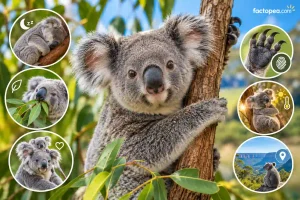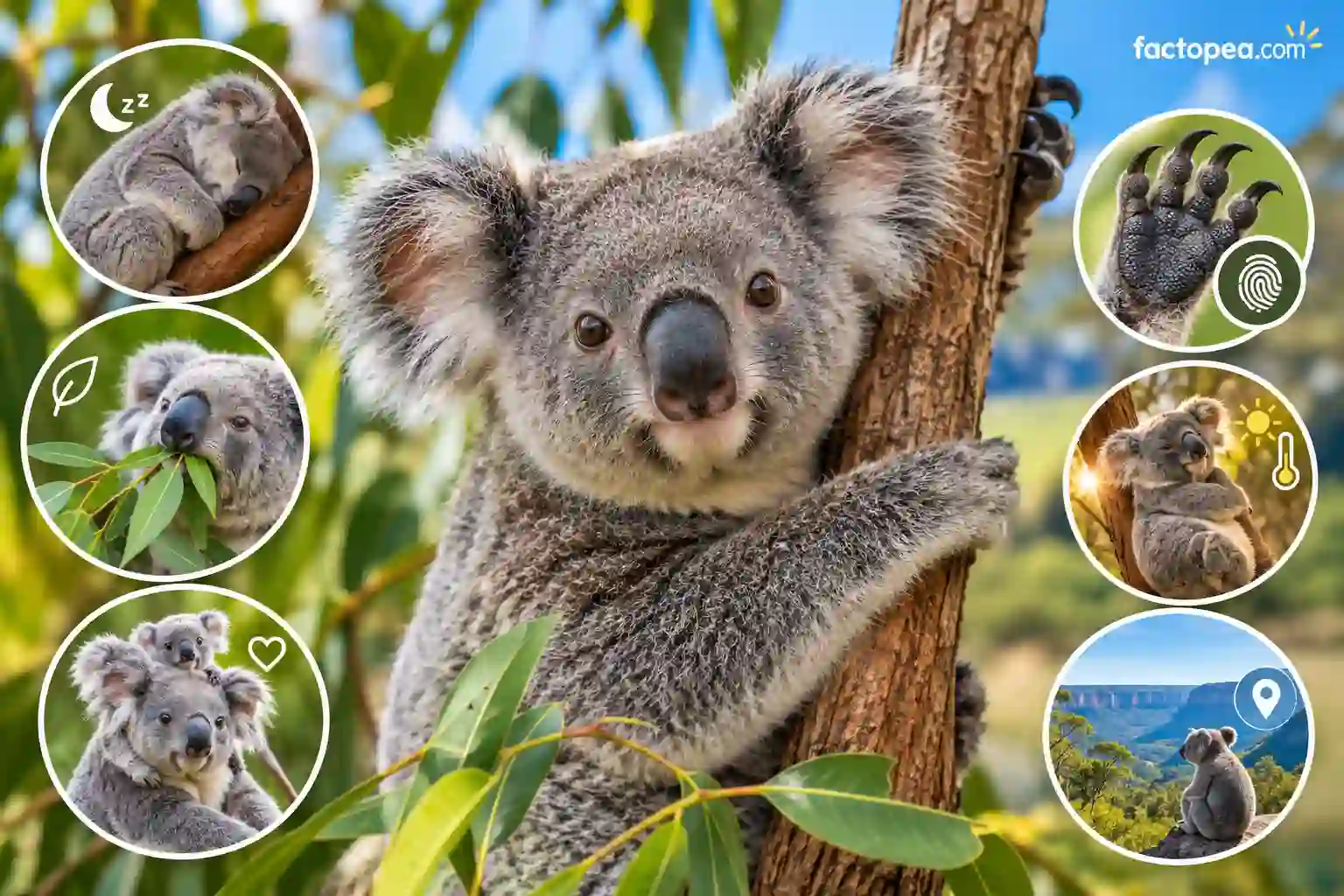
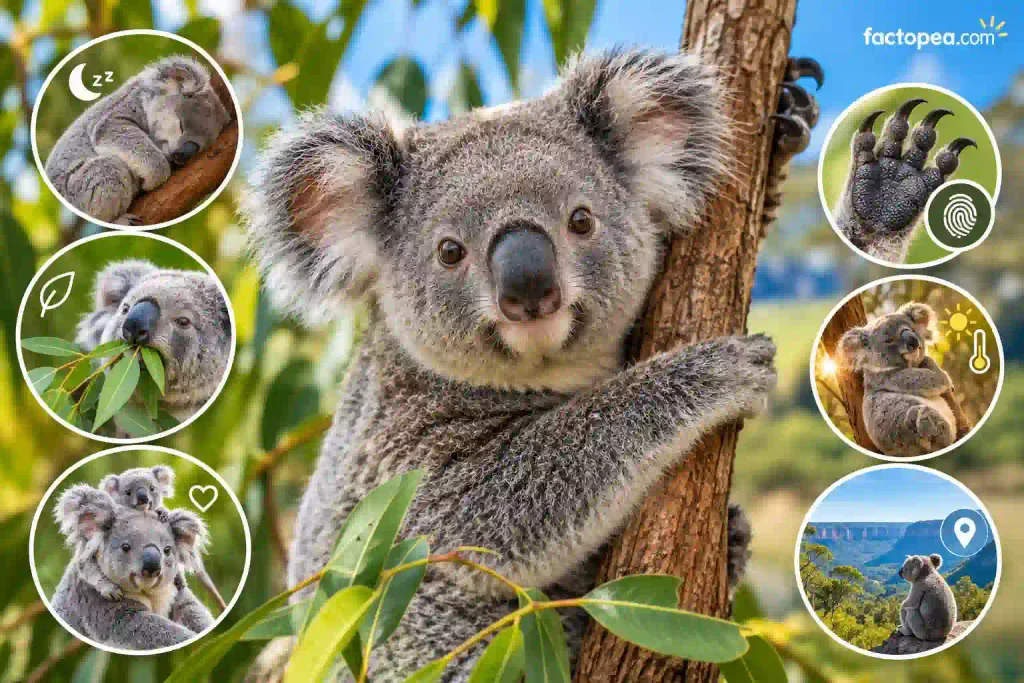
Koalas are among the world’s most recognizable animals, often mistaken for cuddly bears because of their fluffy ears and round noses. However, these fascinating marsupials are much more than adorable faces. They have evolved unique survival strategies, complex behaviors, and remarkable biological adaptations that make them one of Australia’s most extraordinary native animals.
Whether you’re a wildlife enthusiast, planning a trip to Australia, helping your children with school research, or simply curious about these iconic creatures, learning interesting facts about koalas reveals how special and vulnerable they truly are. From sleeping nearly all day to surviving on a highly toxic diet, koalas continue to amaze scientists and nature lovers alike.
This complete guide explores their history, habitat, biology, conservation, and 20 fascinating facts that showcase why koalas deserve global attention and protection.
Quick Facts About Koalas
| Feature | Details |
| Common Name | Koala |
| Scientific Name | Phascolarctos cinereus |
| Animal Group | Marsupial |
| Native Country | Australia |
| Habitat | Eucalyptus forests and woodlands |
| Average Weight | 4–15 kg (9–33 lbs) |
| Average Length | 60–85 cm (24–33 inches) |
| Diet | Mostly eucalyptus leaves |
| Lifespan | 10–18 years in the wild |
| Activity | Mostly nocturnal |
| Conservation Status | Vulnerable in many parts of Australia |
| Main Threats | Habitat loss, disease, bushfires, climate change, vehicle strikes |
Koala Background and Overview
Koalas are tree-dwelling marsupials found only in Australia. Despite their common nickname, “koala bears,” they are not bears at all. Instead, they belong to the marsupial family, meaning females carry their babies in a pouch after birth.
Their natural range stretches across eastern and southeastern Australia, including Queensland, New South Wales, Victoria, and parts of South Australia. Koalas spend almost their entire lives in eucalyptus trees, where they eat, sleep, and rest safely above the ground.
Their dependence on eucalyptus forests makes them highly sensitive to habitat destruction. As cities expand and forests shrink, protecting koalas has become an important conservation priority.
The History of Koalas
Koalas have existed for millions of years. Fossil evidence suggests that their ancestors lived in Australia more than 25 million years ago, although ancient species were much larger than today’s koalas.
For thousands of years, Aboriginal Australians have respected koalas through stories, traditions, and Dreamtime legends. Many Indigenous communities viewed the koala as a symbol of wisdom, patience, and connection to nature.
European settlers first documented koalas in the late 1700s. During the late nineteenth and early twentieth centuries, millions were hunted for their thick fur. This extensive hunting dramatically reduced populations until legal protections were introduced.
Today, habitat destruction, severe bushfires, disease outbreaks, and climate change have replaced hunting as the biggest threats to koala survival.
20 Interesting Facts About Koalas
1. Koalas Are Not Bears
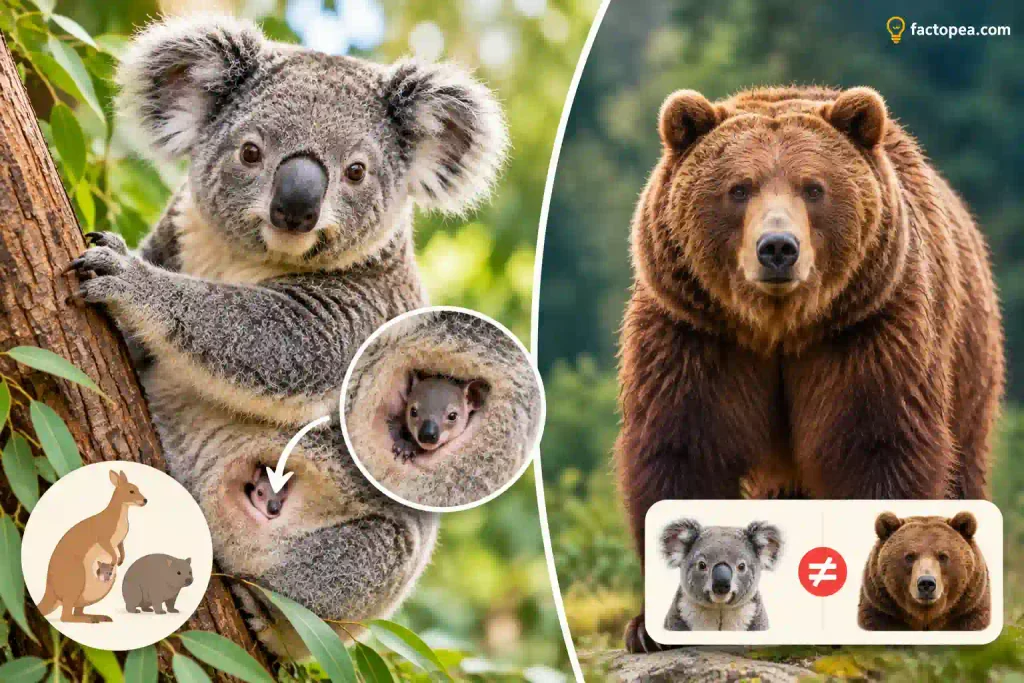
Although they are commonly called “koala bears,” koalas are actually marsupials. Female koalas give birth to tiny underdeveloped babies that continue developing inside their pouch, much like kangaroos and wombats.
This classification makes them biologically very different from bears despite their similar appearance.
2. They Sleep Up to 20 Hours Every Day
Koalas are famous for their long sleeping hours. Because eucalyptus leaves contain very little energy and are difficult to digest, koalas conserve energy by sleeping between 18 and 20 hours daily.
This unique lifestyle helps them survive on one of nature’s least nutritious diets.
3. Their Diet Is Surprisingly Toxic
Most animals cannot safely eat eucalyptus leaves because they contain toxic chemicals.
Koalas possess specialized digestive systems and liver enzymes that neutralize many of these toxins, allowing them to feed on leaves that would poison other mammals.
4. They Are Extremely Selective Eaters
Australia has over 700 eucalyptus species, but koalas usually eat leaves from only about 30 to 50 preferred species.
They carefully choose trees based on leaf chemistry, moisture content, and nutritional value.
5. Every Koala Has Unique Fingerprints
One of the most surprising interesting facts about koalas is that their fingerprints are almost identical to human fingerprints.
Even under a microscope, distinguishing them can be challenging, making koalas one of the few non-human animals with this remarkable feature.
6. Baby Koalas Are Called Joeys
Like other marsupials, young koalas are known as joeys.
A newborn joey is about the size of a jellybean and crawls into its mother’s pouch immediately after birth, where it continues developing for around six months.
7. Koalas Have an Exceptional Sense of Smell
Koalas rely heavily on their noses to identify the healthiest eucalyptus leaves.
Their sense of smell helps them detect nutrient-rich trees while avoiding leaves containing excessive toxins.
8. They Rarely Drink Water
The word “koala” is often believed to originate from an Aboriginal word meaning “no drink.”
Although koalas occasionally drink water during hot weather or droughts, they usually obtain enough moisture from fresh eucalyptus leaves.
9. They Have Powerful Climbing Skills
Koalas spend nearly their entire lives in trees.
Their sharp claws, muscular limbs, and rough paw pads provide excellent grip, allowing them to climb smoothly and securely between branches.
10. Koalas Communicate Using Deep Bellows
Despite their peaceful appearance, koalas produce surprisingly loud vocalizations.
Adult males create deep, rumbling bellows during the breeding season to establish territory and attract females, with sounds carrying over long distances.
11. Their Brains Are Smaller Than Expected
Compared to many mammals of similar size, koalas have relatively small brains.
Scientists believe this is linked to their low-energy diet, as maintaining a larger brain requires significantly more calories.
12. Koalas Have a Specialized Digestive System
Their large cecum, a pouch connected to the intestines, can measure over two meters in length.
Beneficial bacteria inside this organ slowly break down eucalyptus leaves, extracting as many nutrients as possible from the fibrous diet.
13. Mothers Teach Joeys What to Eat
Before transitioning to solid leaves, joeys consume a soft substance called pap.
Pap contains beneficial bacteria that help prepare the joey’s digestive system for processing toxic eucalyptus leaves later in life.
14. Koalas Are Mostly Solitary Animals
Unlike kangaroos that often gather in groups, koalas generally live alone.
Each animal maintains its own home range and usually interacts with others mainly during the breeding season.
15. They Can Swim
Although they spend most of their lives in trees, koalas are capable swimmers.
If necessary, they can cross rivers or flooded areas to reach suitable habitats.
16. Bushfires Pose a Serious Threat
Koalas move slowly, making escape from fast-moving bushfires extremely difficult.
Recent wildfire seasons have destroyed vast areas of eucalyptus forests, reducing available habitat and food supplies.
17. Climate Change Is Affecting Their Food
Rising temperatures and prolonged droughts reduce the moisture and nutritional quality of eucalyptus leaves.
This makes it increasingly difficult for koalas to obtain enough water and nutrients from their primary food source.
18. Koalas Help Scientists Study Evolution

Because marsupials evolved separately from placental mammals, koalas provide valuable insights into evolutionary biology.
Researchers continue studying their genetics, immune systems, and reproductive biology to better understand mammalian evolution.
19. Their Fur Acts as Natural Insulation
Koalas possess thick gray fur that keeps them warm during cool nights while also reflecting sunlight during hot Australian summers.
This natural insulation helps them adapt to changing seasonal conditions.
20. Conservation Efforts Are Growing Worldwide
Wildlife organizations, researchers, veterinarians, and volunteers are working together to protect koalas.
Habitat restoration, wildlife corridors, disease research, rescue programs, and responsible land management are helping improve long-term conservation prospects.
Koalas and Australian Culture
Koalas have become one of Australia’s most recognizable national wildlife symbols. Their image appears in tourism campaigns, educational materials, conservation programs, and souvenirs around the world.
For Aboriginal Australians, koalas have long been part of cultural traditions and Dreamtime stories. Different Indigenous communities tell unique stories explaining the koala’s characteristics, emphasizing respect for wildlife and the natural environment.
Today, koalas also inspire children’s books, documentaries, cartoons, and wildlife education programs that encourage conservation awareness.
Special Features That Make Koalas Unique
Several biological adaptations help koalas survive in their challenging environment.
Their thick fur protects them from both heat and cold. Strong claws allow effortless climbing, while their rough paw pads improve grip on tree bark.
Their digestive system is among the most specialized of any mammal, enabling them to process fibrous eucalyptus leaves that contain toxins.
Koalas also have excellent hearing and smell, helping them locate food and detect nearby animals despite having relatively poor eyesight.
Famous Places to See Koalas
Australia offers many excellent opportunities to observe koalas in natural habitats and protected wildlife parks.
Popular locations include:
- Great Otway National Park in Victoria
- Kangaroo Island in South Australia
- Port Stephens Koala Sanctuary in New South Wales
- Lone Pine Koala Sanctuary in Queensland
- Noosa National Park
- Raymond Island
- Tidbinbilla Nature Reserve near Canberra
Visitors are encouraged to observe koalas quietly from a respectful distance without disturbing their natural behavior.
The Modern Importance of Koalas
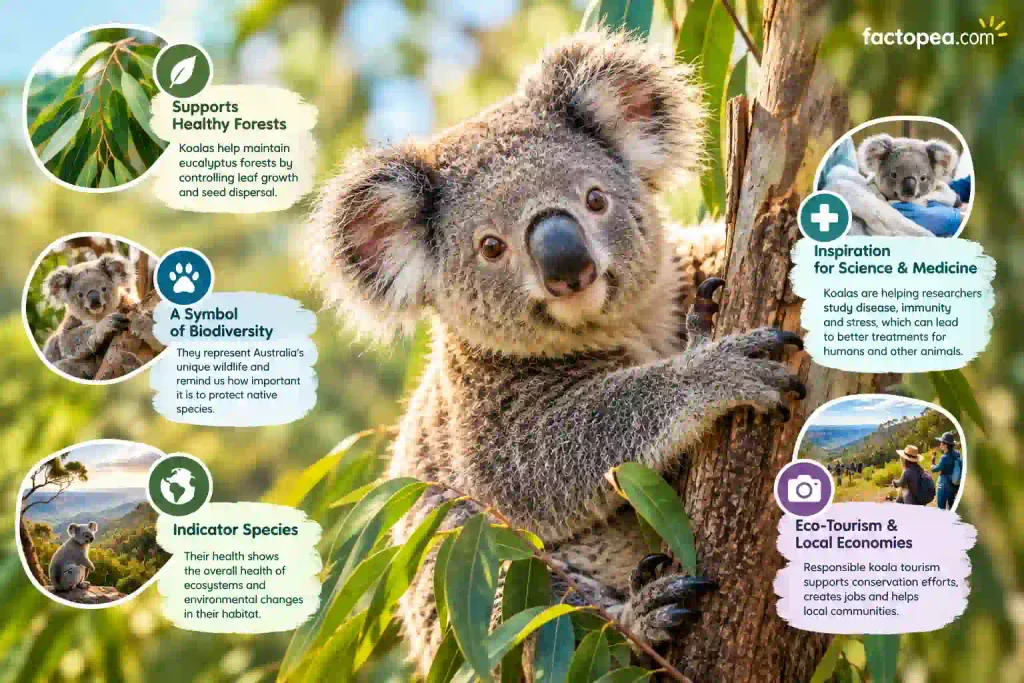
Koalas play an important ecological role in Australia’s forest ecosystems. They contribute to nutrient cycling and serve as flagship species for forest conservation.
Economically, koalas support Australia’s tourism industry, attracting millions of international visitors interested in wildlife experiences.
Their conservation also benefits many other native species because protecting eucalyptus forests preserves habitats for birds, reptiles, insects, and other mammals.
Scientists continue monitoring koala populations to understand how disease, urban development, and climate change influence wildlife survival.
Frequently Asked Questions
Are koalas bears?
No. Koalas are marsupials, not bears. Female koalas carry and raise their young in a pouch.
Why do koalas sleep so much?
Koalas sleep up to 20 hours each day because eucalyptus leaves provide very little energy, making rest essential for survival.
What do koalas eat?
They mainly eat eucalyptus leaves, selecting only certain species that offer the best balance of nutrients and lower toxin levels.
Can koalas drink water?
Yes, but they rarely need to. Most of their water comes from fresh eucalyptus leaves, although they drink during hot weather or drought.
Why are koalas vulnerable?
Habitat loss, bushfires, disease, climate change, road accidents, and dog attacks are the primary threats to wild koala populations.
How long do koalas live?
Wild koalas generally live between 10 and 18 years, depending on habitat quality, disease, and environmental conditions.
Are koalas friendly?
Koalas are generally calm wild animals but should not be approached or handled. They have strong claws and can become defensive if threatened.
Conclusion
Learning interesting facts about koalas reveals far more than their charming appearance. These remarkable marsupials have evolved specialized diets, unique digestive systems, exceptional climbing abilities, and fascinating reproductive behaviors that set them apart from nearly every other mammal.
At the same time, koalas face increasing challenges from habitat destruction, climate change, disease, and bushfires. Protecting Australia’s eucalyptus forests not only safeguards koalas but also preserves entire ecosystems that countless native species depend upon. The more we understand these extraordinary animals, the better equipped we are to support the conservation efforts that will help ensure future generations can continue to admire one of Australia’s most iconic wildlife treasures.

I’m James Anderson, a curious researcher and writer who loves discovering interesting facts and exploring the stories behind them. I enjoy writing about history, science, culture, nature, geography, and the surprising details of everyday life. I aim to turn reliable information into simple, engaging content that helps readers learn something new and useful.
Books by James Anderson:
- The Fascinating World of Facts
- 1000 Things You Never Knew