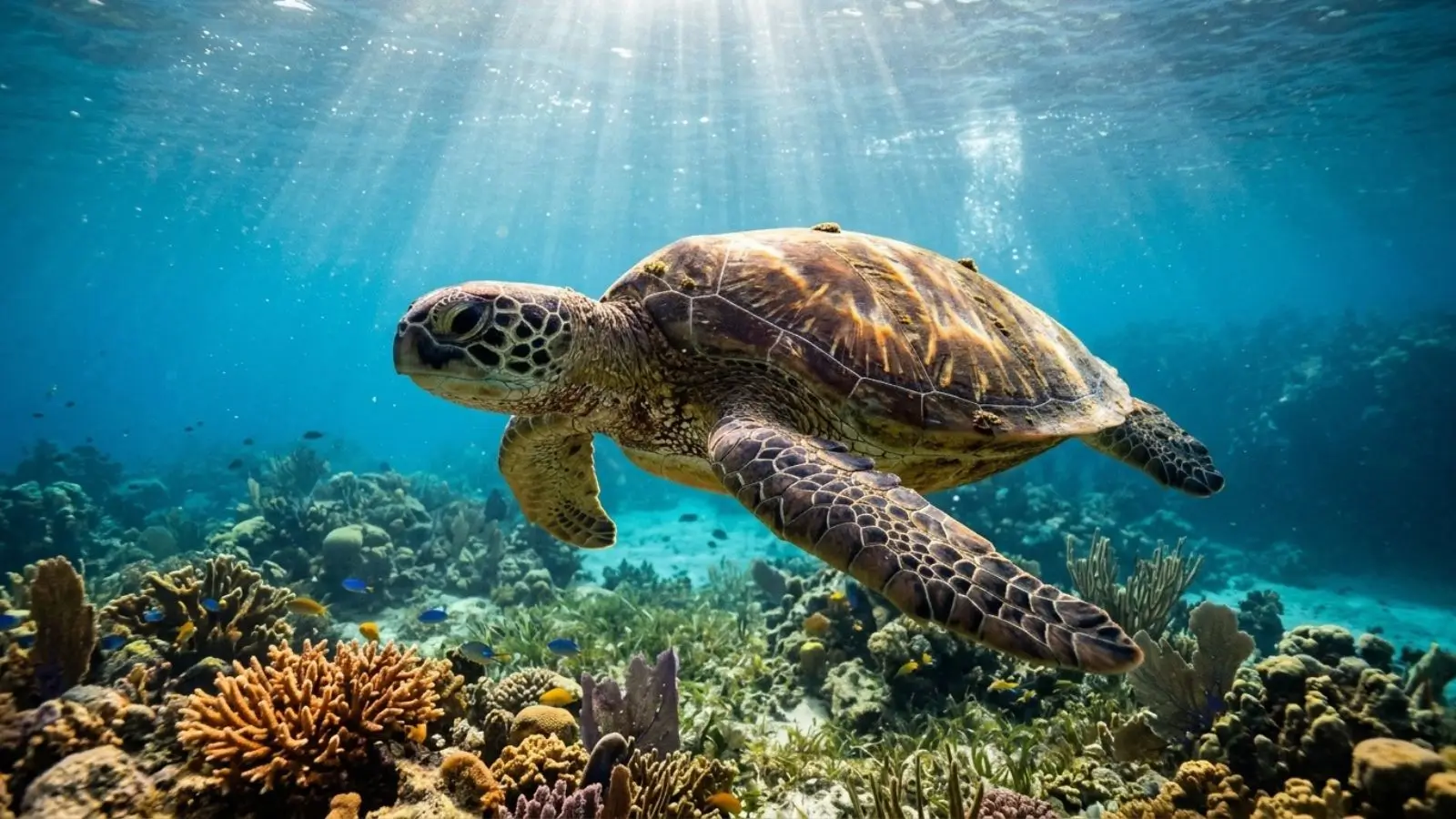
Sea turtles are some of the ocean’s most fascinating survivors. These ancient marine reptiles have been swimming through Earth’s oceans for more than 100 million years, surviving major environmental changes and developing remarkable adaptations for life underwater.
But their story goes far beyond their age. Sea turtles can navigate using Earth’s magnetic field, travel thousands of miles between feeding and nesting grounds, and produce hatchlings whose sex depends on nest temperature. Each discovery reveals something extraordinary about the natural world.
Exploring interesting facts about sea turtles also helps us understand their importance to marine ecosystems and the growing challenges they face.
From their unusual biology to their incredible migrations, these ocean travelers have plenty of secrets worth discovering.
Quick Facts About Sea Turtles
| Feature | Details |
| Scientific Group | Superfamily Chelonioidea |
| Animal Type | Marine reptiles |
| Number of Living Species | 7 |
| Main Habitat | Tropical, subtropical, and temperate oceans |
| Lifespan | Often several decades; some may live 50 years or longer |
| Largest Species | Leatherback sea turtle |
| Smallest Species | Kemp’s ridley sea turtle |
| Diet | Jellyfish, seagrass, algae, sponges, crabs, and mollusks, depending on species |
| Breathing | Air breathing animals that must surface |
| Natural Navigation | Uses Earth’s magnetic field and other environmental cues |
| Nesting Behavior | Females lay eggs on sandy beaches |
| Major Threats | Plastic pollution, fishing gear, habitat loss, and climate change |
| Geographic Distribution | Oceans worldwide, except polar waters where conditions limit their presence |
| Ecological Importance | Supports seagrass meadows, coral reefs, and marine food webs |
Meet the Seven Sea Turtle Species
Sea turtles have streamlined bodies and powerful flippers that help them travel through ocean waters. Unlike land turtles, they cannot pull their heads and flippers completely inside their shells.
The seven living species are green, loggerhead, leatherback, hawksbill, olive ridley, Kemp’s ridley, and flatback sea turtles. Each has distinct characteristics and ecological needs.
Green turtles often graze on seagrass and algae as adults, while hawksbills feed on sea sponges around coral reefs. Leatherbacks are known for their flexible, leathery shells and deep diving abilities. These differences show how each species has adapted to particular feeding grounds and marine environments.
20 Interesting Facts About Sea Turtles
1. They Lived Alongside Dinosaurs
Sea turtles have an evolutionary history stretching back more than 100 million years. Their ancestors lived during the age of dinosaurs, and their descendants survived dramatic changes in Earth’s environments.
Their long history is a remarkable example of evolutionary adaptation. However, surviving ancient environmental changes does not make modern sea turtles immune to today’s threats, many of which develop rapidly because of human activity.
2. They Navigate Using Earth’s Magnetic Field
Sea turtles can detect information from Earth’s magnetic field and use it to help navigate across open oceans.
This ability is especially valuable when traveling through waters without obvious landmarks.
Researchers believe magnetic cues help turtles recognize geographic regions and maintain useful travel directions.
Scientists continue to investigate the details of this navigation system, which remains one of the most fascinating features of sea turtle biology.
3. Females Often Return to Their Birth Region
Many female sea turtles return to the general region where they hatched when it is time to lay their own eggs. This behavior is called natal homing.
Magnetic information and other environmental cues may help them locate suitable nesting areas after years spent at sea.
Their remarkable journeys also explain why protecting nesting beaches is essential for maintaining healthy populations.
4. Leatherbacks Are Ocean Giants
The leatherback is the largest living sea turtle. Large adults can reach around two meters in length and weigh several hundred kilograms, with exceptional individuals exceeding 900 kilograms.
Unlike other living sea turtles, leatherbacks have a flexible, leathery shell rather than a hard shell covered with scutes.
Their specialized bodies help them travel long distances and search for jellyfish in deep, sometimes cold, waters.
5. Some Sea Turtles Dive Beyond 1,000 Meters
Leatherback sea turtles are capable of diving to depths exceeding 1,000 meters. These dives allow them to search for prey far below the ocean’s surface.
Their bodies have adaptations that support oxygen storage and efficient diving. The depth and duration of individual dives vary according to environmental conditions, prey availability, and activity.
6. Hatchlings Face a Dangerous First Journey
A female may lay dozens or more than 100 eggs in a nest, depending on the species. After hatching, young turtles must cross the beach and reach the ocean while facing predators and environmental hazards.
Birds, crabs, and fish can prey on hatchlings, while artificial lights and obstacles can make reaching the water more difficult.
Only a small proportion survive to adulthood, which makes the survival of mature breeding turtles especially important.
7. Nest Temperature Influences Their Sex
Sea turtles have temperature dependent sex determination. This means the temperature during egg development influences whether hatchlings develop as male or female.
Warmer nests generally produce more females, while cooler conditions tend to produce more males within the relevant temperature range.
Rising temperatures can therefore affect hatchling sex ratios and create additional challenges for vulnerable populations.
8. Adult Green Turtles Mostly Eat Plants
Young green turtles may eat a varied diet, but many adults feed mainly on seagrass and algae.
Their grazing can help maintain healthy seagrass meadows, which provide food and shelter for numerous marine species.
These underwater habitats also store carbon and contribute to productive coastal ecosystems.
9. Hawksbill Turtles Help Coral Reefs
Hawksbill turtles feed on sea sponges and other invertebrates, using their narrow beaks to reach food among reef structures.
By influencing sponge populations, they can affect competition between different organisms living on coral reefs.
Their feeding behavior contributes to reef biodiversity, although healthy reefs also depend on clean water, suitable temperatures, and many other environmental factors.
10. They Cannot Hide Inside Their Shells
Unlike many land turtles, sea turtles cannot retract their heads and flippers completely into their shells. Their bodies are designed for swimming rather than withdrawing into a protective enclosure.
Their streamlined shells reduce resistance in the water, while powerful front flippers provide propulsion. Rear flippers help with steering and digging nests when females come ashore.
11. Their Migrations Span Thousands of Miles
Some sea turtles travel thousands of miles between feeding areas and nesting beaches. Certain recorded journeys have exceeded 10,000 miles, depending on the species and migration route.
These journeys can cross international waters, making cooperation between countries important for conservation.
Tracking turtles helps researchers identify migration corridors, feeding grounds, and areas where fishing activity may pose a risk.
12. Their Tears Help Remove Excess Salt
Sea turtles may appear to cry when they nest, but the fluid around their eyes is not an expression of emotion.
Specialized glands near their eyes remove excess salt absorbed from seawater. This adaptation helps them maintain the body’s salt balance while living in a marine environment.
13. They Support Healthy Marine Ecosystems
Sea turtles contribute to ocean health through their different feeding habits. Green turtles graze on seagrass, hawksbills influence sponge communities, and leatherbacks consume jellyfish.
These activities affect marine food webs and habitat conditions. Protecting sea turtles can therefore support other organisms that depend on healthy seagrass meadows, coral reefs, and coastal ecosystems.
14. Their Shells Are Part of Their Skeleton
A sea turtle’s shell is connected to its skeleton and includes bony structures covered by protective tissues.
In most species, the upper shell is covered by scutes, while leatherbacks have a different, leathery outer covering.
The shell grows with the animal and provides structural protection. Its shape also helps the turtle move efficiently through the water.
15. Plastic Pollution Puts Them at Risk
Floating plastic bags can resemble jellyfish, making them dangerous to turtles that mistake them for food. Swallowed plastic may block the digestive tract, cause internal injuries, or interfere with feeding.
Turtles can also become entangled in discarded fishing lines and other debris. Reducing single use plastics, disposing of waste responsibly, and improving fishing gear practices can help lower these risks.
16. Their Vision Is Adapted to Underwater Life
Sea turtles can see underwater and use visual information to find food, recognize their surroundings, and navigate habitats.
Their vision is adapted to marine conditions, although visibility changes with depth, water clarity, and available light.
These abilities help them locate food and move through complex environments such as coral reefs.
17. Olive Ridleys Gather in Huge Numbers
Olive ridley turtles are famous for mass nesting events called arribadas. During these events, thousands of females may come ashore at the same time to lay eggs.
These gatherings are spectacular natural events and can help researchers monitor nesting populations.
Protecting the beaches where arribadas occur is important because disturbance, development, and human activity can affect nesting success.
18. They Can Stay Underwater for Hours
Sea turtles breathe air through lungs, so they must eventually return to the surface. However, when resting, some can remain underwater for several hours because their metabolism slows and oxygen is used more slowly.
During active swimming or feeding, they usually surface more frequently. Their ability to remain submerged depends on the species, activity level, water temperature, and other conditions.
19. Every Species Has a Different Ecological Role
Sea turtles do not all perform the same job in marine ecosystems. Green turtles graze on seagrass, hawksbills feed on reef organisms, and leatherbacks help influence jellyfish populations.
These varied feeding habits contribute to the complexity of marine food webs. Protecting all seven species helps preserve a wider range of ecological relationships.
20. Conservation Can Make a Difference
Protective measures such as safeguarding nesting beaches, reducing accidental capture in fishing gear, and establishing marine protected areas can improve survival opportunities for sea turtles.
Some populations have shown signs of recovery following sustained conservation efforts, although progress differs by species and location.
Continued monitoring matters because improvements in one area do not necessarily mean every population is safe.
Why Sea Turtles Matter Today
Sea turtles are more than fascinating marine animals. They help maintain ecological relationships that support coral reefs, seagrass meadows, and other ocean habitats.
Healthy marine ecosystems also benefit coastal communities through fisheries, tourism, biodiversity, and natural coastal protection.
When sea turtle populations decline, their losses can reflect wider environmental pressures, including habitat degradation and pollution.
Practical actions can help. Reducing plastic waste, choosing responsible wildlife tourism, supporting reputable conservation programs, and respecting nesting beaches all contribute to their protection.
Where Can You See Sea Turtles?
Wildlife enthusiasts may have opportunities to observe sea turtles at nesting beaches, marine reserves, and reef habitats around the world.
Notable destinations include Tortuguero National Park in Costa Rica, Ras Al Jinz Turtle Reserve in Oman, Heron Island in Australia, Zakynthos in Greece, and parts of Florida’s coastline.
Sightings depend on the season, species, and local conditions. Visitors should follow conservation guidelines, avoid touching turtles, keep their distance, and never disturb nests or hatchlings.
Responsible wildlife tourism allows people to appreciate these animals without placing unnecessary stress on them.
FAQS
How many species of sea turtles are there?
There are seven living sea turtle species. Each has distinct physical characteristics, habitats, diets, and conservation needs.
Which is the largest sea turtle?
The leatherback is the largest living sea turtle. Large adults can exceed 900 kilograms, although size varies between individuals.
Why do sea turtles return to the same beach?
Many females return to the general region where they hatched to lay eggs. Magnetic information and other environmental cues may help guide them.
What do sea turtles eat?
Their diets vary by species and include jellyfish, seagrass, algae, sponges, crabs, and other marine organisms.
Why are sea turtles endangered?
Major threats include fishing gear entanglement, plastic pollution, habitat destruction, climate change, and illegal harvesting. The level of risk differs among species and populations.
How long do sea turtles live?
Many sea turtles live for several decades, but exact lifespans are difficult to determine and vary by species.
Can sea turtles breathe underwater?
No. Sea turtles have lungs and must surface for air, although they can stay submerged for extended periods.
Conclusion
Sea turtles combine ancient history with extraordinary adaptations, from magnetic navigation to long distance migrations.
Their different feeding habits also help sustain important marine habitats.
Learning these interesting facts about sea turtles reveals why their survival matters.
By reducing pollution, respecting nesting beaches, and supporting responsible conservation, we can help give these remarkable ocean travelers a safer future.
Discover More Post
- 23 Fascinating Dolphin Facts: Intelligence, Behavior, Ocean Life
- 25 Interesting Facts About Cheetahs You Should Know?
- 26 Interesting Facts About Animals For You (2026)

I’m Grace Anderson, a lifelong learner and writer with a habit of asking, “Why?” I love discovering the stories, facts, meanings, and explanations hiding behind ordinary questions. At Factopea, I turn my research into clear articles that readers can enjoy without needing complicated terminology. I believe learning does not always have to feel like studying—it can simply begin with one interesting question.
Books: Curiosity Has an Answer and Things You Never Noticed
2 thoughts on “25 Interesting Facts About Sea Turtles: Ocean Wonders (2026)”